
GreencarbonWorld ClimatePolicy Brief: The COP30 Deforestation Roadmap — What's Inside, Who Stayed Out and the $300bn Delivery Gap
Short answer: the COP30 deforestation roadmap is a voluntary, country-led implementation menu — three pillars, five "forest dimensions" and 18 "implementation approaches" — published by Brazil's COP30 presidency on 3 November after the Belém summit failed to reach the consensus needed to put it into the formal outcome. It adds no new targets, but it does put a price on delivering the targets already agreed: an estimated $300bn a year by 2030, against finance that currently reaches less than one-third of that.
That gap is the part most teams skip past. A compliance lead at a forest-risk supply chain company does not need another declaration of intent; they need to know which instruments carry legal force, which carry money, and which carry neither. This brief walks through what the roadmap actually says, why India, Russia and others stayed out, and what it costs to deliver — with the dates and checklists you can act on.
What is the COP30 deforestation roadmap, and why is it outside the COP agenda?
The deforestation roadmap was one of the signature announcements of Brazil's COP30 presidency in Belém, even though it fell outside the official, negotiated outcomes. President Luiz Inácio Lula da Silva first put forward the roadmap on deforestation and forest degradation, together with one on the fossil fuel transition, at the leaders' summit in Belém a few days before COP30 opened.
By the close of COP30, nearly 100 countries had voiced support, including the EU with its 27 member states and the 56-member Coalition for Rainforest Nations. Some 93 countries formally urged that a reference to a new roadmap for ending deforestation be included in COP30's formal negotiated outcome.
That still fell short of the 196 parties needed for consensus at a COP, so the roadmap was never a formal outcome. During the closing plenary, COP30 president André Corrêa do Lago announced that the presidency would work towards creating both a deforestation roadmap and a fossil-fuel phaseout roadmap outside of the COP process.
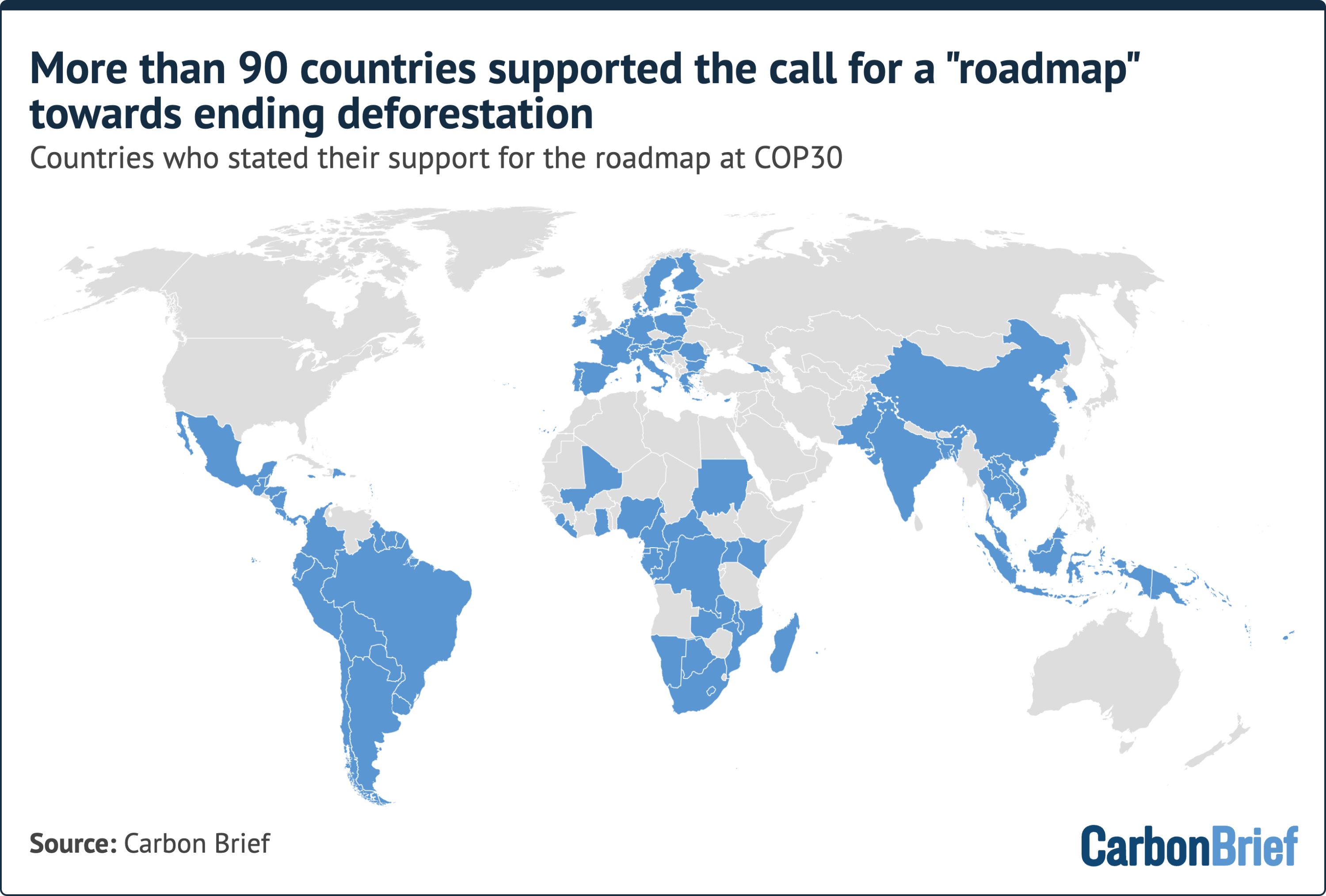
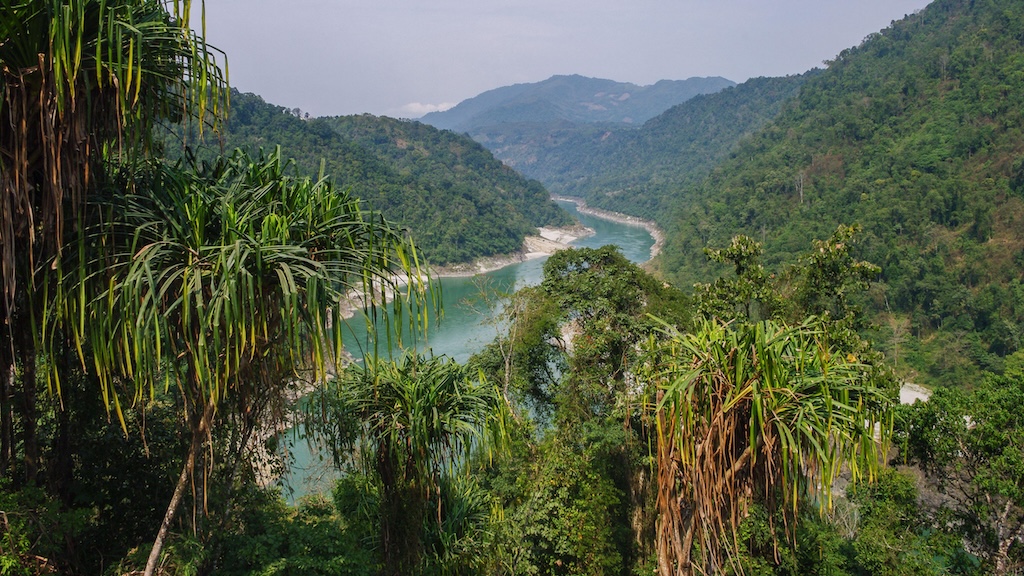
The roadmap is the newest in a series of international pledges aimed at ending forest loss. In 2014, 39 countries pledged to end natural forest loss by 2030 at UN Climate Week, under the New York Declaration on Forests. Seven years later, at COP26, more than 140 countries signed the Glasgow Leaders' Declaration on Forests and Land Use, in which they "commit to working collectively to halt and reverse forest loss and land degradation by 2030". The goal of halting and reversing deforestation by 2030 was incorporated into a negotiated text for the first time two years later, at COP28 in Dubai, where it formed part of the global stocktake.
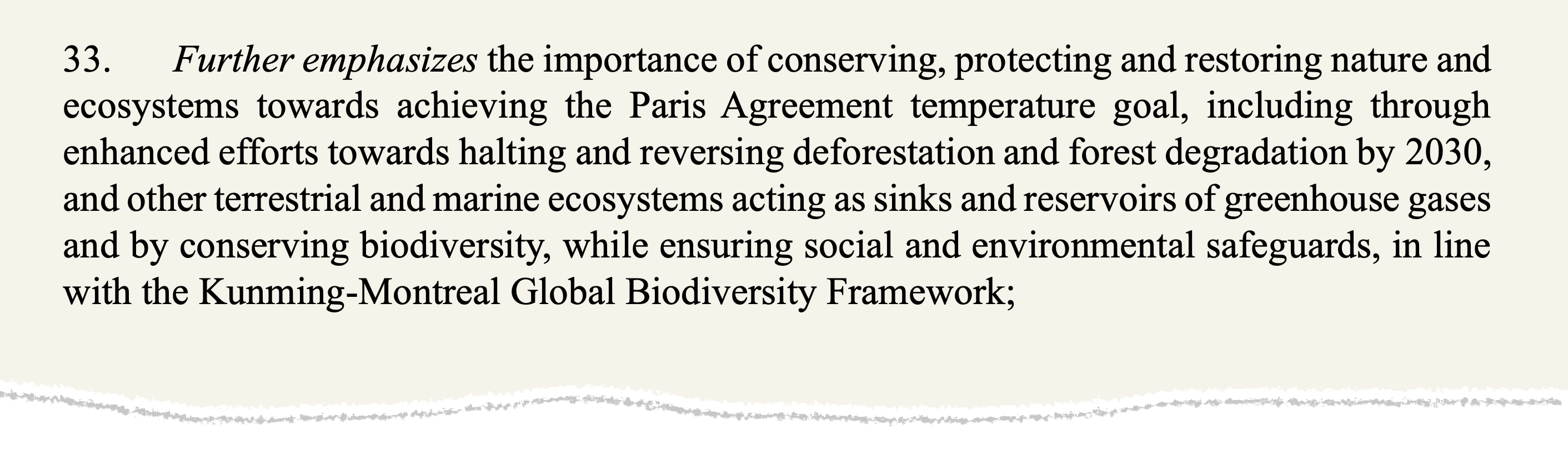
Siang valley, Arunachal Pradesh.
Unlike those earlier pledges, the roadmap makes no new commitments and does not "seek to reopen agreed decisions". Its stated objective is to "translate forest-related outcomes into coordinated, country-led action while respecting different national circumstances, priorities and implementation challenges".
| Pledge or instrument | Year | Legal character | Who is bound |
|---|---|---|---|
| New York Declaration on Forests | 2014 | Voluntary signatory declaration | 39 countries |
| Glasgow Leaders' Declaration on Forests and Land Use | 2021 | Voluntary, launched at COP26 | 140+ countries |
| Global stocktake decision | 2023 | Negotiated consensus text at COP28 | All parties |
| COP30 deforestation roadmap | 2026 | Voluntary, outside the COP agenda | No new subscribers |
After COP30 concluded, the presidency — together with the Climate Policy Initiative thinktank — began soliciting inputs from countries, civil society organisations, Indigenous peoples, academic researchers, the private sector and other groups. The Climate Policy Initiative served as secretariat and technical partner to the roadmap process. The secretariat says it received more than 200 contributions following that invitation; just 18 of them came from countries, and four from blocs — the EU, the Coalition for Rainforest Nations, the Alliance of Small Island States (AOSIS) and the Least Developed Countries (LDC) blocs — themselves.
What is inside it: three pillars, five forest dimensions, 18 implementation approaches
The roadmap was released less than a week before the COP31 climate summit is due to begin, at an event hosted by the UN Development Programme in Brasilia. At the launch, Do Lago pointed to recent figures showing Brazil's deforestation rate had fallen to its lowest level on record — a drop of more than 70% since 2022. Official data put the loss at roughly 3,335 km² in the 12 months to July, the lowest since records began in 1988.
"Even the optimists wouldn't believe that we were able to decrease deforestation" by as much as the country has managed in recent years, he said. He hoped the roadmap would serve as a "living document" and give countries a "practical pathway for climate action".
The document divides forest action into three complementary parts — national action, international action and financial mechanisms. For each of the three, it sets out current actions or instruments and the enabling conditions needed to promote action, then offers "COP30 presidency proposals on the way forward" for each pillar.
Under "national efforts", the roadmap tackles the challenge of halting and reversing deforestation across five "forest dimensions":
- Maintaining existing forests.
- Using forests sustainably while generating value for communities.
- Combatting forest degradation.
- Combatting deforestation.
- Restoration, reforestation and afforestation.
The roadmap then identifies 18 policies or "implementation approaches" that countries can draw on — among them establishing or maintaining protected areas, recognising the territorial rights of Indigenous peoples, managing the spread of pests and plant diseases, and restricting permits for activities associated with forest conversion. The list is explicitly not meant as an "exhaustive or prescriptive classification". For each policy it explains the approach, summarises the evidence for its effectiveness and gives examples of how countries are applying it, before discussing enabling conditions such as land governance and environmental education.
For national action, it proposes a five-step process for countries to follow, providing "guiding questions" at each step. Read as a management sequence, those steps map onto what a compliance team would recognise: baseline, drivers, policy, finance, monitoring. That is our interpretation, not the roadmap's own wording — but it is the fastest way to make a voluntary document operational.
International architecture: where the legal teeth actually are
On "international architecture for forest action", the roadmap examines how various international environmental and human-rights instruments address deforestation in different ways. It states:
"Climate change, biodiversity, land degradation, Indigenous peoples and local communities' rights, ecosystem conservation and species protection are addressed through distinct international regimes, but their objectives and implementation intersect in important ways in relation to forests."
That sentence is the practical point: forest risk is now governed by several overlapping regimes, and a company can be compliant with one and exposed under another. The roadmap highlights several global forest-monitoring initiatives that can support national efforts, while noting that countries' capacity to access and use such information "remains uneven"; it calls for improved technical cooperation and greater capacity-building.
Finally, it addresses two cross-border issues: crime and trade. On trade, it observes that measures rewarding compliance are generally more effective than those imposing "additional economic and administrative burdens on exporters". Its proposals include strengthening national capacity for investigating environmental crime and prioritising trade policies that reward sustainable, deforestation-free production.
Finance: a $300bn need, less than one-third funded
The roadmap notes that countries need an estimated $300bn per year by 2030 to halt and reverse deforestation, yet current finance reaches less than one-third of that figure. Nearly 90% of it comes from domestic public finance, as forest countries already dedicate "substantial effort" to protecting their domestic policies and budgets.
It offers 10 proposals for action on forest finance, among them aligning domestic finance flows to support forest action, enacting effective benefits-sharing measures and strengthening the position of forests in carbon markets. The wider squeeze on public climate finance is already visible — see the GreencarbonWorld COP31 donor scorecard for the numbers.
Brazil's own instrument, the Tropical Forest Forever Facility, sits in this pillar. The fund is designed as payment-for-performance: annual payments to tropical forest countries are results-based, tied to agreed satellite monitoring standards, and it commits to allocating at least 20% of payments directly to Indigenous peoples and traditional and local communities (World Resources Institute explainer). More than $5.5bn was announced for the facility as 53 countries endorsed its launch declaration during COP30 (COP30 presidency announcement).
The document closes with an appeal to countries to "keep the collective dialogue going" through the conclusion of the second global stocktake in 2028. In a statement, Kelly Stone, coordinator of the civil society network Climate Land Ambition and Rights Alliance, said:
"The forest commitments in the first global stocktake and this roadmap process are important steps, but these commitments need to translate into actual urgent action on the ground. This roadmap needs to be taken forward in a process where countries are working together for rapid, ambitious action on the ground to address deforestation and degradation and protect food security. We cannot afford to wait."
Why India, Russia and others stayed out
In Belém, discussions around the deforestation roadmap were highly charged, and several countries did not sign on. India has historically opposed and raised concerns about top-down commitments on mitigation and land-use change; it did not sign the original Glasgow pledge at COP26, objecting to "trade" being linked to forests and climate action. In Belém, India — as part of the Like Minded Developing Countries bloc — objected to including voluntary roadmaps outside the COP agenda in the formal COP30 outcome.
Yet in an interview after the talks concluded, the country's minister for environment, forests and climate, Bhupender Yadav, told the Times of India that India "welcomes" the forest roadmap, adding that it additionally "endorses" Brazil's Tropical Forest Forever Facility fund.
Russia was an early objector, setting out its position as early as April last year. While reiterating its commitment to the Glasgow forest declaration and the first global stocktake, it "does not support the development of a universal roadmap", arguing that:
"…such initiatives are not mandated under the agreed international climate architecture and go beyond adopted decisions under the UNFCCC and the Paris Agreement."
Russia hosts the world's largest boreal forests, which are experiencing more intense wildfires. In its submission on the deforestation roadmap, Russia "underscored" that there is no "universally agreed, legally binding definition" of forest degradation, although it subsequently adds that wildfires are a "key driver" of degradation. Like India, it also opposed the roadmap on trade grounds.
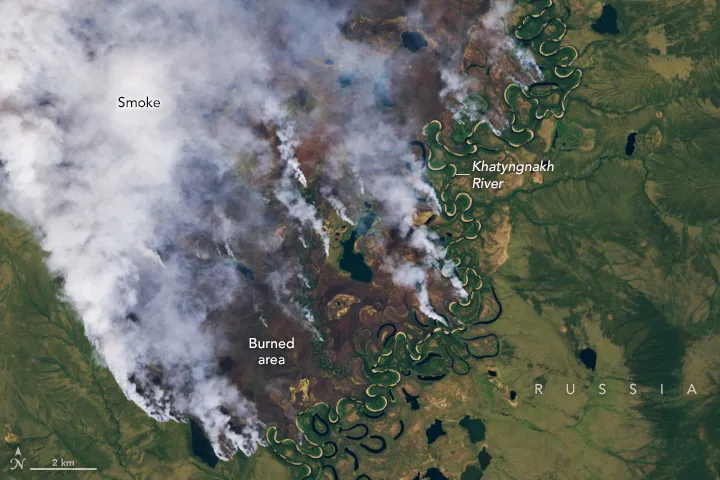
Wildfires in Yakutia.
Other countries were wary of signing on to new non-negotiated mitigation commitments outside the official COP agenda, at the expense of other agenda items such as adaptation finance.
At the recently concluded Yerevan COP17 nature talks, the deforestation roadmap's coordinator Marco Túlio Scarpelli Cabral told Carbon Brief that it does not make sense to talk about more countries signing up to the non-negotiated roadmap, given that countries have agreed by consensus to tackle deforestation within the global stocktake and biodiversity COPs:
"All countries have already taken this [deforestation] commitment, both in the Kunming-Montreal [Global Biodiversity Framework] with some converging targets, but also in the global stocktake… We have all accepted [it]. So we don't need any country to subscribe to the roadmap."
That logic explains why the roadmap is not designed to persuade countries to agree to tackle deforestation; it seeks to build on an assumed consensus by drawing on previous agreements such as the global stocktake. Speaking at a press conference attended by Carbon Brief on 3 November, Corrêa do Lago said they took the Dubai agreement into account and then began looking for "instruments and ways to go ahead and take next steps":
"The climate change agenda is advancing faster than the negotiations [themselves], so we restructured the agenda."
What this means for companies: EUDR deadlines and supply-chain exposure
For compliance and ESG teams, the roadmap is not the binding instrument — the EU's deforestation regulation is. Its due diligence obligations now apply from 30 December 2026 for large and medium-sized companies, and from 30 June 2027 for micro and small businesses, after delays pushed back an original end-2024 start (European Commission implementation notice). Operators must be able to prove that forest-risk commodities are deforestation-free and traced to plot level.
The sequencing matters for planning. The voluntary roadmap rewards sustainable, deforestation-free production; the EUDR requires operators to prove it. A company that waits for the roadmap to become a compliance standard will miss the 30 December 2026 date.
There is also a displacement risk. Brazil's tighter enforcement has coincided with a rise in Bolivia's forest loss, where low land prices and weak enforcement have attracted farmers and ranchers from across the border. Roadmap-style national action in one jurisdiction can push clearing into the next — which is precisely why the roadmap's trade pillar rewards compliance rather than punishing exporters.
Barriers to implementation, in the countries' own words
In February 2026, the Brazilian COP presidency asked countries to describe specific barriers to implementing a forest roadmap and the tangible support they need. From political strife to wildfires and reliance on firewood during an energy crisis, the submissions list a number of overlapping challenges.
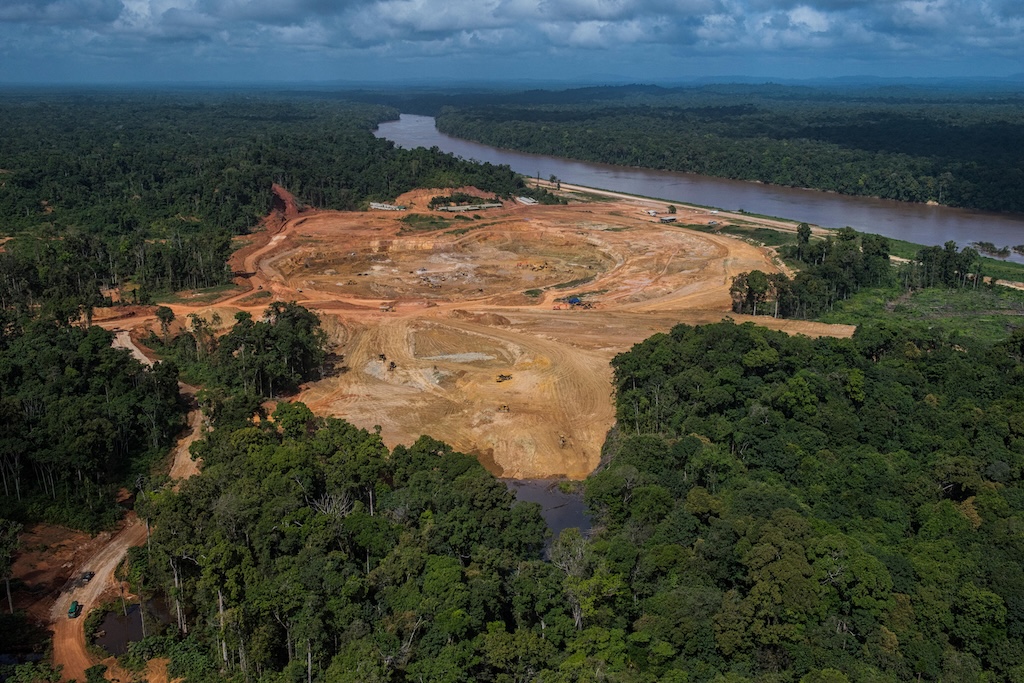
- Guyana and Suriname both highlighted that keeping existing "forests intact" is undervalued compared to "pressures from extractive industries", such as mining or agriculture.
- The EU, Switzerland and Mexico point to the role of agricultural expansion in the loss of forest and pasture land; Norway and Mexico highlighted illegal loggers offering higher rewards than conservation.
- Canada and Russia pointed to an "inconsistent definition" of forest degradation.
- Suriname and Azerbaijan, both biodiversity-rich with significant forest cover, called for more "predictable" and "affordable" access to climate finance.
- The Coalition of Rainforest Nations called for "a clear financial assessment of the total funding required to halt forest loss".
- Donor countries emphasised domestic, private and innovative finance. The UK called for more "blended finance to de-risk private investment at scale"; Norway spoke of the need to "repurpos[e]" harmful subsidies; Australia highlighted biodiversity credits and nature markets as "restor[ing] and protect[ing] land and biodiversity and reduc[ing] emissions at the same time".
- Monitoring was a common challenge. AOSIS, Armenia and Azerbaijan called for technical support, including satellite monitoring, while Canada, Indonesia, Russia, Azerbaijan and Australia all cited intensifying wildfires and called for early detection systems and support for monitoring fires in remote areas.
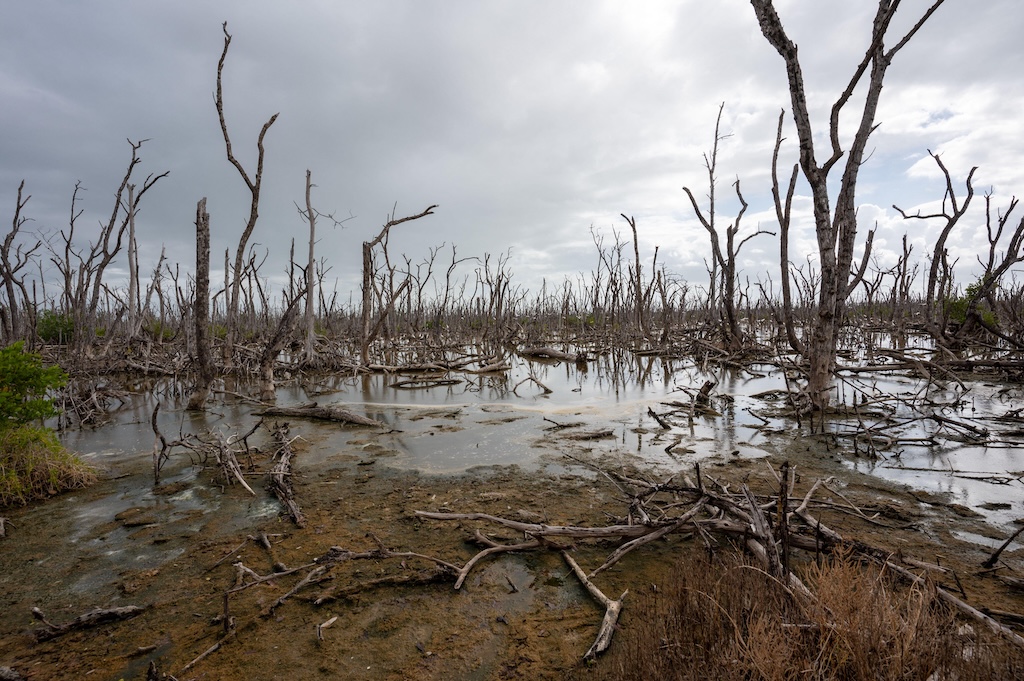
- AOSIS called for coastal mangroves and inland terrestrial forests to be included in the definition of forests, noting that climate-driven impacts are already degrading mangroves.
- Context matters: Mauritius points to pressures from a "limited availability" of land, and Sudan draws attention to 70% of its population relying on firewood as an energy source amid conflict.
Common misconceptions
- It is not a new global commitment. It makes no new commitments and does not "seek to reopen agreed decisions".
- It is not a financing pledge. The $300bn figure is an estimate of need, not committed money; current finance is less than one-third of it.
- It is not a substitute for binding trade rules. The EUDR and equivalent regimes have their own deadlines, due diligence duties and penalties.
- It does not need new signatories. Cabral's position is that all countries have already taken the deforestation commitment through the global stocktake and the Kunming-Montreal Global Biodiversity Framework.
Implementation checklist: what to do before COP31
For forest-country agencies
- Map your drivers of loss and degradation, then select from the 18 implementation approaches rather than starting from scratch.
- Price your gap against the $300bn a year estimate and identify which of the 10 finance proposals fit your fiscal position.
- Stand up monitoring before you promise results — the roadmap rewards performance, and donors are increasingly paying for it.
- Prepare your input for the second global stocktake in 2028, which is the process the roadmap asks countries to "keep the collective dialogue going" through.
For corporate compliance and ESG teams
- Confirm your EUDR obligations and calendar the 30 December 2026 deadline for large and medium-sized companies.
- Trace forest-risk commodities to plot level and test whether your supplier data would survive an authority request.
- Treat the roadmap as a signal of where public finance and enforcement will move, not as a compliance standard.
- Expect leakage: monitor jurisdictions adjacent to tightening enforcement, where clearing tends to shift.
FAQ
Is the COP30 deforestation roadmap legally binding?
No. It was never a formal COP outcome because it fell short of the 196 parties needed for consensus. It is a voluntary, country-led document published by the COP30 presidency outside the UN climate process, and it makes no new commitments.
How much money does the roadmap commit?
None directly. It estimates that countries need $300bn per year by 2030 to halt and reverse deforestation, and notes that current finance reaches less than one-third of that figure, with nearly 90% of it from domestic public sources. Its 10 finance proposals are options, not pledges.
Why did nearly 100 countries support it and it still failed?
Because COP decisions require consensus among all 196 parties. Some 93 countries urged a reference to the roadmap in the formal outcome, but India, Russia and others objected, so the presidency moved the process outside the COP agenda.
What does it mean for companies selling forest-risk commodities?
Treat the binding rules as the deadline and the roadmap as the direction of travel. The EUDR's due diligence obligations apply from 30 December 2026 for large and medium-sized companies, and the roadmap's trade proposals reward deforestation-free production rather than punishing exporters.
Will more countries sign up at COP31?
Not in the way the question implies. The roadmap's coordinator, Marco Túlio Scarpelli Cabral, argues that no country needs to subscribe because all have already accepted the deforestation commitment through the global stocktake and the Kunming-Montreal Global Biodiversity Framework. Expect implementation reports, not a new declaration.
参考来源
- Carbon Brief — original reporting on the COP30 deforestation roadmap and the country submissions cited above.
- European Commission, Access2Markets — EUDR implementation timeline.
- World Resources Institute — What is the Tropical Forest Forever Facility?
- The Nature Conservancy — How TNC supports the Tropical Forest Forever Facility
- COP30 Presidency — TFFF launch declaration
- Reuters — Deforestation in Brazil's Amazon falls to lowest on record