
GreencarbonWorld GreenTech Deep Dive: Why the 45 kg Light Cavalry Solar UAV Chooses 30 Hours Over Two Months — and What It Cuts From a Scope 1 Ledger

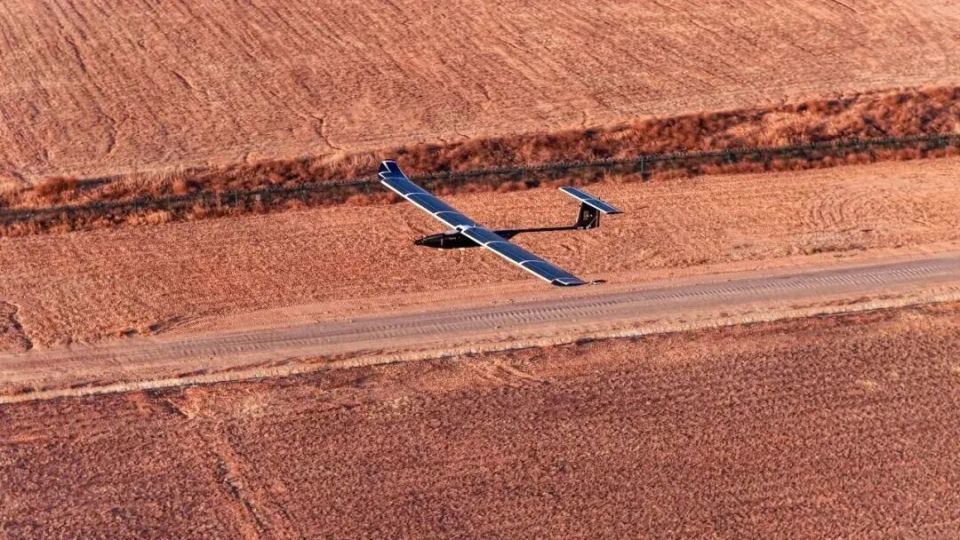
The short answer: yes — an 8-metre, 45 kg solar-powered UAV can take over a meaningful share of low-altitude patrol work at lower cost and lower emissions, provided your routes stay below 7,000 metres and your sensors fit the payload class. The first commercial-grade proof point, the Light Cavalry built by the 11th Academy of China Aerospace Science and Technology Corporation (CASC), flew on 11 November 2026 at an airfield in northwest China.
I advise sustainability teams for a living, and the blocker is almost never ambition. A pipeline operator can recite helicopter fuel burn per hour — that is Scope 1, direct emissions from sources the company owns or controls — but ask what a cleaner patrol option would actually cost and emit, and the operating data sits in vendor spreadsheets nobody audits. It is the same wall as Scope 3: not an unwillingness to count, but supplier records that cannot be obtained. That is a real problem, and it is why a hardware milestone matters less than the operating ledger it lets you rewrite.
Why did solar aircraft keep growing — and keep breaking?
Conclusion first: nearly every high-profile solar aircraft failure shares one cause — the airframe grew faster than battery physics allowed.
NASA's Helios flew with a wingspan wider than a Boeing 747, and low-level turbulence tore the wing apart. Google and Meta poured hundreds of millions of dollars into solar high-altitude platforms; one came apart four minutes after takeoff, the other lost its right wing to a light breeze on landing. Both programmes were eventually cut.
The loop is mechanical: more photovoltaic area demands a longer wingspan, a longer wing demands thinner structure, and a thin wing needs climate-controlled hangars, long runways and large support crews. Airbus's Zephyr still holds the record — 25-metre wingspan, 67 days aloft, above 20,000 metres — and Britain's BAE Systems stretches PHASA-35 to 35 metres on a near-space experimental path. Impressive aircraft, but you cannot ask a pipeline patrol crew to requisition one.
Harvard researchers put a number on the ceiling: their analysis identified roughly 500 watt-hours per kilogram of battery energy density as the threshold for sustained multi-week solar flight. Below that line, adding storage is circular math — more batteries make the aircraft heavier, heavier demands more lift, more lift demands more storage. Mainstream lithium-ion cells still sit well under it, which is why the sensible engineering question is not how to fly longer, but where a shorter mission already pays.
What route did CASC's 11th Academy choose, and why is it different?
Conclusion first: the 11th Academy did not abandon high altitude because it failed technically. It walked away because the missions that pay are at low altitude.
This is the state team behind the Rainbow drone series. In 2017 it already flew a 45-metre-wingspan solar UAV above 20,000 metres — the near-space game was learned early, along with its limits: beautiful parameters, awkward operations.
Hence the Light Cavalry. Wingspan cut to 8 metres, takeoff weight to 45 kg, fuselage 3.2 metres long; a pickup truck transports it and ground preparation runs about 20 minutes from parking to launch. The wing carries domestic flexible thin-film photovoltaic cells, lightweight storage batteries sit inside, the carbon-fibre composite airframe absorbs catapult loads, and the supply chain is domestic end to end.
The design targets reveal the philosophy: 30 hours of endurance — one complete day-night cycle, flying on sunlight by day and stored charge by night — and a 7,000-metre ceiling, high enough for an electro-optical pod to resolve the outlines of ground vehicles, low enough for field staff to link up on light portable radios. Two months aloft was never the goal.
The broader landscape says this is a route, not a stunt. At Northwestern Polytechnical University, Professor Zhou Zhou's Meiying team flew a low-altitude civilian solar UAV for 27.6 hours back in 2019 — a domestic record on precisely this practical track. Zhu Shengli at AVIC's First Aircraft Institute leads Qimingxing 50, a large solar UAV on the high-altitude long-endurance branch. Two tracks in parallel mean a technology net across demand levels rather than a single bet — and for a buyer, that signals a forming supply base rather than one vendor's demo.
What does this change about patrol costs — and carbon?
Conclusion first: the real value is not a record. It is dragging solar UAVs out of the “whether it can fly” validation stage into the “whether it is worth using” commercial stage — and both halves of that shift, build cost and operating cost, are checkable.
Build side: earlier solar aircraft were expensive because every component was aerospace-custom in tiny volumes. China now runs the world's most complete photovoltaic, lithium-battery, carbon-fibre and UAV supply chains, proven at consumer scale. That does not make the aircraft cheap; it moves pricing off the aerospace-custom curve — good enough that field crews can actually use the hardware without treating every flight as a board-level risk.
Operating side: third-party benchmarks for pipeline patrol put drones at roughly $200–300 per mile against more than $1,200 per mile for helicopters — industry estimates, not Light Cavalry pricing. The catch hides in the same estimates: typical battery-electric drones manage 20–40 minutes per flight, fixed-wing types one to two hours. A 30-hour solar platform is not an increment on that table; it is a different row.
| Patrol option | Typical endurance | Cost benchmark (industry estimates) | Emissions profile | Deployment |
|---|---|---|---|---|
| Crewed helicopter | Hours per sortie, fuel-limited | $1,200+ per mile | Scope 1 fuel burn every flight hour | Airport base, crew scheduling |
| Battery-electric multirotor | 20–40 minutes | Inside the $200–300 per mile band | No tailpipe; charging lands in Scope 2 | Field crews, short legs |
| Solar fixed-wing, Light Cavalry class | 30-hour design target, full day-night cycle | Drone band; no public price yet | No tailpipe in operation | Pickup transport, 20 minutes parking-to-launch |
Carbon side: every helicopter patrol hour you retire is Scope 1 fuel that stops burning — a direct line out of the inventory. Be honest about the boundary, though: solar-electric flight is not zero-impact. Cells, batteries and airframe carry manufacturing footprints, and batteries need end-of-life handling. The defensible claim is operational — patrol hours swapped and documented — not a lifecycle-free badge.
Is it ready to buy? What is proven, what is not
Conclusion first: what 11 November 2026 demonstrated is a successful first flight and rapid ground deployment. The 30 hours and 7,000 metres remain design values; treat them as procurement hypotheses until a customer aircraft completes a full cycle.
CASC's own account of the flight: vehicle-launched, about 20 minutes of ground preparation, and a modular design that adapts quickly to communication, remote sensing and other mission payloads. For patrol and fire-monitoring duty, endurance milestones alone do not certify a service; our earlier piece on solar drones for fire monitoring lists the questions that decide whether you can actually buy one, starting with repeatable airspace authorization.
Fit and friction, concretely. It fits long linear assets — pipelines, highways and rail, transmission lines — plus reservoir and embankment patrol, early-stage wildfire detection and rapid wide-area imagery return after floods. It strains under high-latitude winters, where the solar day shortens and the 30-hour budget tightens; under sustained overcast, which forces landing cycles; and anywhere recovery without a runway is unresolved. At 7,000 metres the published capability is resolving vehicle outlines — wide-area watching, not close-range defect measurement.
FAQ: what operations and sustainability teams ask first
Is 30 hours enough when rivals promise months?
For low-altitude patrol the mission metric is continuous route coverage across a full day-night cycle, not altitude records. Month-scale flight requires 500 Wh/kg-class battery physics and a stratospheric envelope. Different problem, different aircraft — and a very different budget.
Will switching actually cut our Scope 1 emissions, and how do we prove it?
Scope 1 covers direct emissions from sources you own or control; Scope 2 is purchased energy; Scope 3 is the value chain. The swap only reduces Scope 1 if the helicopter hours genuinely retire. Log litres and flight hours per route-kilometre before the pilot, repeat after, and book the delta from auditable activity data — the same hourly-ledger logic we argue for AI data-centre carbon reporting. Annual certificates will not survive an audit.
Can it carry our sensors?
CASC describes modular adaptation for communication, remote sensing and other payloads. Before assuming your pod fits, check mass and power against the 45 kg takeoff-weight budget, data-link compatibility with light portable radios, and whether your sensor needs closer range than a 7,000-metre operating altitude delivers.
Does this generate carbon credits such as CCER?
CCER — China Certified Emission Reduction — is the domestic voluntary crediting system, and credits require an approved methodology. No public methodology today covers patrol-mode substitution by solar UAVs. Book the savings as an operational reduction in your own inventory, not as tradable credits, until a methodology says otherwise.
A priority checklist before you budget
- Build the baseline ledger first: fuel litres, flight hours and cost per route-kilometre for current patrols. It is simultaneously your Scope 1 numerator and your payback denominator.
- Screen routes against the aircraft, not the brochure: task altitude below 7,000 metres, coverage that fits a 30-hour day-night cycle, sensors within the payload class and the data link.
- Benchmark the money honestly: start from third-party patrol estimates, then demand a local quote plus a full-cycle trial flight — a demo sortie proves launch, not endurance.
- Clear the operational gate early: airspace authorization, recovery logistics, weather windows and crew training kill more patrol programmes than aerodynamics ever do.
- Claim only what you can audit: reductions booked from before-and-after activity data, never from certificates you cannot back.
References
- CASC — China's first commercial-grade small and medium pure solar UAV completes first flight, 11 November 2026: m.spacechina.com
- Harvard John A. Paulson School of Engineering and Applied Sciences — Powering Solar-Powered Flight (500 Wh/kg threshold): seas.harvard.edu
- Phoenix Drone Pros — Drone vs Manned Aircraft for Pipeline Inspection (patrol cost benchmarks): blog.phoenixdronepros.com