
Siemens Xcelerator at JSW Greentech: A GreenTech Q&A on Teamcenter, Mendix and India's AMPSTAR EV Push
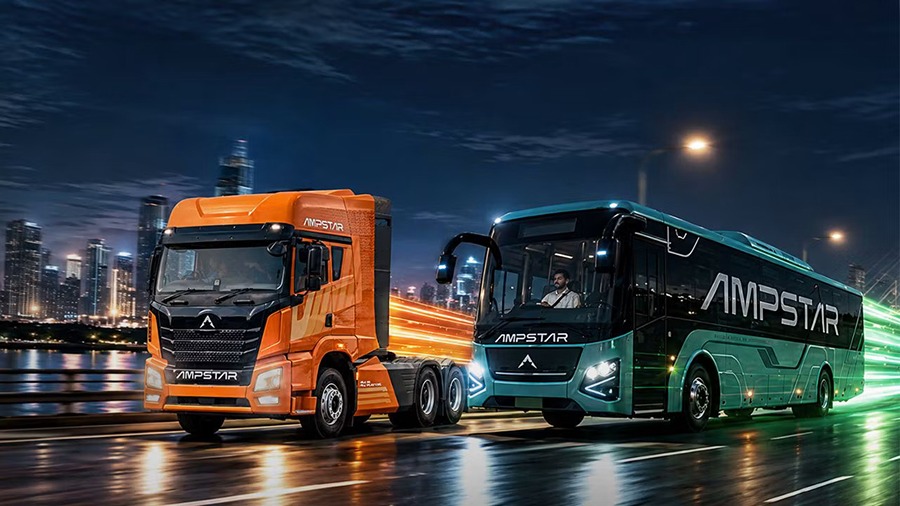
Where should engineering data live, and who is allowed to read it? That is the first decision for any company building electric buses and trucks in volume. JSW Greentech Limited has answered it by selecting Siemens Xcelerator software as the integrated digital foundation for commercial electric vehicle development in India: Teamcenter and Mendix will span the R&D center in Pune and the new plant at Chhatrapati Sambhajinagar, and in practice they will set the pace at which AMPSTAR vehicles reach the road.
What exactly was selected, and what does the scope cover?
Concise answer: one product lifecycle management (PLM) backbone, one low-code collaboration layer, and an engineering site plus a factory to be wired onto them. Siemens said JSW Greentech Limited picked Siemens Xcelerator software to build an integrated digital foundation for its commercial electric vehicle work. The programme sits under the company's effort to develop electric buses, trucks and other sustainable mobility solutions under the AMPSTAR brand, carried out from the R&D center in Pune and a state-of-the-art greenfield manufacturing facility in Chhatrapati Sambhajinagar, India.
The business targets stated alongside the selection are unusually specific: connect engineering, product development and manufacturing processes inside one unified PLM strategy; strengthen collaboration across teams; raise engineering quality; shorten development cycle times; and move new electric vehicles into the Indian market faster.
| Element | What it is | Why it matters on an EV programme |
|---|---|---|
| Siemens Xcelerator | The software portfolio selected | One foundation from design through manufacturing, not point tools |
| Teamcenter | PLM backbone / digital thread | Requirements, bill of materials (BOMs), product structures, change control |
| Mendix | Low-code collaboration layer | Supplier portal and business-process work beyond internal teams |
| ERP integration | Synchronised engineering and business data | Purchasing and planning read the same BOM that design owns |
| Pune | R&D center | Where the authoritative product data is created |
| Chhatrapati Sambhajinagar | Greenfield manufacturing facility | Plant data decisions can be made before lines exist, not retrofitted |
| AMPSTAR | Brand for e-buses, trucks and other sustainable mobility | Several product families sharing one data model |
Why does an electric commercial vehicle programme need a digital thread?
Because the product is a running negotiation between disciplines. A battery-electric bus or truck stacks mechanical structures, an electrical architecture and supplier-owned subsystems, and all three keep changing while the others are being frozen. When those versions live in separate tools, rework is not an exception; it is the budget line nobody labels.
The cost of that gap is measurable. In 2020 the U.S. National Institute of Standards and Technology reported that poor interoperability between engineering data formats costs U.S. manufacturers an estimated $20.9 billion to $42.9 billion a year, part of a study family that previously put the capital facilities sector's loss at $15.8 billion annually (nist.gov). On the plant side, Schneider Electric's industry blog (5 September 2024) argues the same point from an operator's angle: threading design data all the way into battery plant operations is what allows output to rise while resource consumption falls.
Read the JSW Greentech scope against that backdrop and the design logic is clear. Teamcenter is cast as the digital thread backbone: connecting the sources of product and engineering information, supporting BOMs and product structures, and carrying requirements management, program planning, change management and collaboration across mechanical and electrical engineering disciplines.
Teamcenter or Mendix — who does which job?
Rule of thumb: Teamcenter is the record, Mendix is the handshake. Neither replaces the other, and projects go wrong when a supplier-facing app publishes numbers that the record system does not own.
- Teamcenter holds the product truth — structures, BOMs, requirements, change history — and links mechanical with electrical engineering work.
- Mendix supports supplier and business process collaboration, including a Mendix-based portal through which Teamcenter extends digital processes past internal teams and into the wider product development and supplier ecosystem.
- ERP stays the system of business record; the key element Siemens highlights in this programme is integration between Teamcenter and JSW Greentech's ERP system, synchronising engineering and business data and improving information flow between engineering and business functions.
- Visibility and traceability across the organisation and the supply chain are the stated outcome of combining the three, rather than a separate module.
Cloud subscription or installed system — and when does it pay back?
Decision note first: the announcement does not disclose which deployment model JSW Greentech Limited has chosen, and readers should not infer one. Both routes are live in the Siemens portfolio: Teamcenter installed and configured under your own IT, or Teamcenter X, the subscription edition Siemens markets as "instant-on", with maintenance and updates handled by the vendor to cut IT overhead.
GreencarbonWorld analysis, not vendor guidance: payback on a programme like this is normally judged against the first product build, not against a licence date. A greenfield site such as Chhatrapati Sambhajinagar is the favourable case, because the data model, the release gates and the supplier onboarding can be defined while the building is still a construction plan. A brownfield acquisition is the opposite: legacy part numbers and supplier spreadsheets have to be reconciled before any workflow is trustworthy.
Is the Indian demand signal strong enough to carry the spend?
Likely yes, and this is the part a software announcement never explains. India's PM-eBus Sewa programme is built around deploying 10,000 electric buses on a public-private-partnership model; the World Resources Institute puts the associated support at roughly $2.4 billion for deployment and operation across up to 169 cities, while a 2026 PIB note records buses sanctioned for 116 cities in 20 states and 6 union territories. The International Council on Clean Transportation's India e-bus readiness work points to a national ambition of 40% electric bus penetration by 2030.
For a manufacturer, that schedule converts engineering cycle time into commercial eligibility: tender windows, phased delivery dates and penalty clauses are all downstream of how fast a validated BOM can be released. "Shorten development cycle times" is therefore a revenue statement, not an IT one.
Five questions readers keep asking us
Is PLM a decarbonisation tool?
Not on its own. It is the layer that makes a carbon claim auditable: which material, which supplier, which revision, and when the change was accepted. Siemens' own framing of PLM benefits pairs assured compliance with faster innovation, which is the honest ordering — footprint accounting needs the record before it needs the dashboard (blogs.sw.siemens.com).
Can we launch the supplier portal first and the PLM backbone later?
You can, and it usually backfires. A portal without one authoritative BOM simply distributes disagreements faster. The architecture in this case has the portal sitting on top of Teamcenter for a reason.
How do we know the Teamcenter–ERP integration is actually working?
Track three numbers: elapsed time from an accepted engineering change to the matching purchase order; the error rate of BOM transfers between the two systems; and the share of part numbers with a single owner of record. If those do not move, integration is a diagram, not a capability.
Does "collaboration across mechanical and electrical engineering" mean harness design is automated?
No. The stated scope is data collaboration across those disciplines. Nothing in the announcement commits JSW Greentech Limited to specialist harness or battery-management tooling, and procurement teams should not write that into a specification by assumption.
What should a mid-size EV assembler copy from this?
The sequence, not the vendor list: one BOM source of truth, then ERP synchronisation, then a supplier-facing portal, then reporting on top of those.
Action list: seven checks before signing a PLM deal for an EV programme
- Freeze the product structure for one vehicle family before configuring workflows; multi-family modelling comes second.
- Map suppliers by tier and count how many BOM handoffs cross your firewall — that count defines your portal scope.
- Choose the deployment model per site: new lines often justify a subscription, acquired plants usually need a hybrid plan.
- Record a cycle-time baseline in the week of signature; without it, "shortened development cycle" cannot be claimed later.
- Write down who may release a BOM and who may block a purchase order, before software roles are configured.
- Put data and traceability duties into supplier agreements, not only into licence terms — access rights are contractual.
- Review after two tender cycles against the baseline, and treat a miss as a scope problem before blaming the tool.
The GreenTech view
What is interesting here is not the logo on the contract but the admission embedded in it: an EV maker scaling from drawing office to greenfield plant now treats its engineering data as shared infrastructure, in the same category as the charging architecture or the battery pack. For sustainability leads and plant engineers, the practical takeaway is narrow and testable — the value of a digital thread shows up as fewer reissued drawings, cleaner supplier handoffs and a defensible change history, and none of those appear until one team owns one BOM.
Reference sources
- Siemens newsroom, JSW Greentech and Siemens Xcelerator announcement: https://news.siemens.com/en-us/siemens-jsw-greentech/
- NIST, "Inadequate Modeling Data Costs Billions to US Manufacturers" (12 February 2020): https://www.nist.gov/news-events/news/2020/02/inadequate-modeling-data-costs-billions-us-manufacturers
- Schneider Electric blog, digital thread in EV battery plants (5 September 2024): https://blog.se.com/energy-management-energy-efficiency/2024-09-05/using-a-digital-thread-can-optimize-ev-battery-plants-production/
- Siemens, Teamcenter X cloud PLM product page: https://www.siemens.com/en-us/products/teamcenter/teamcenter-x-cloud-plm/
- Siemens Teamcenter blog, 5 key benefits of PLM: https://blogs.sw.siemens.com/teamcenter/benefits-of-plm-software-modern-insights/
- World Resources Institute, India's 10,000 electric bus rollout: https://www.wri.org/outcomes/india-rolls-out-10000-electric-buses-dozens-cities
- PIB, PM e-Bus Sewa service note: https://www.pib.gov.in/PressReleasePage.aspx?PRID=2237544
- ICCT, electric bus market readiness in India: https://theicct.org/wp-content/uploads/2026/07/ID-481-%E2%80%93-India-e-bus-readiness_ZEBRA_final-1.pdf