
ApusNeo's 100-Hour Solar Flight: What Stratospheric Low-Carbon Monitoring Can and Cannot Deliver
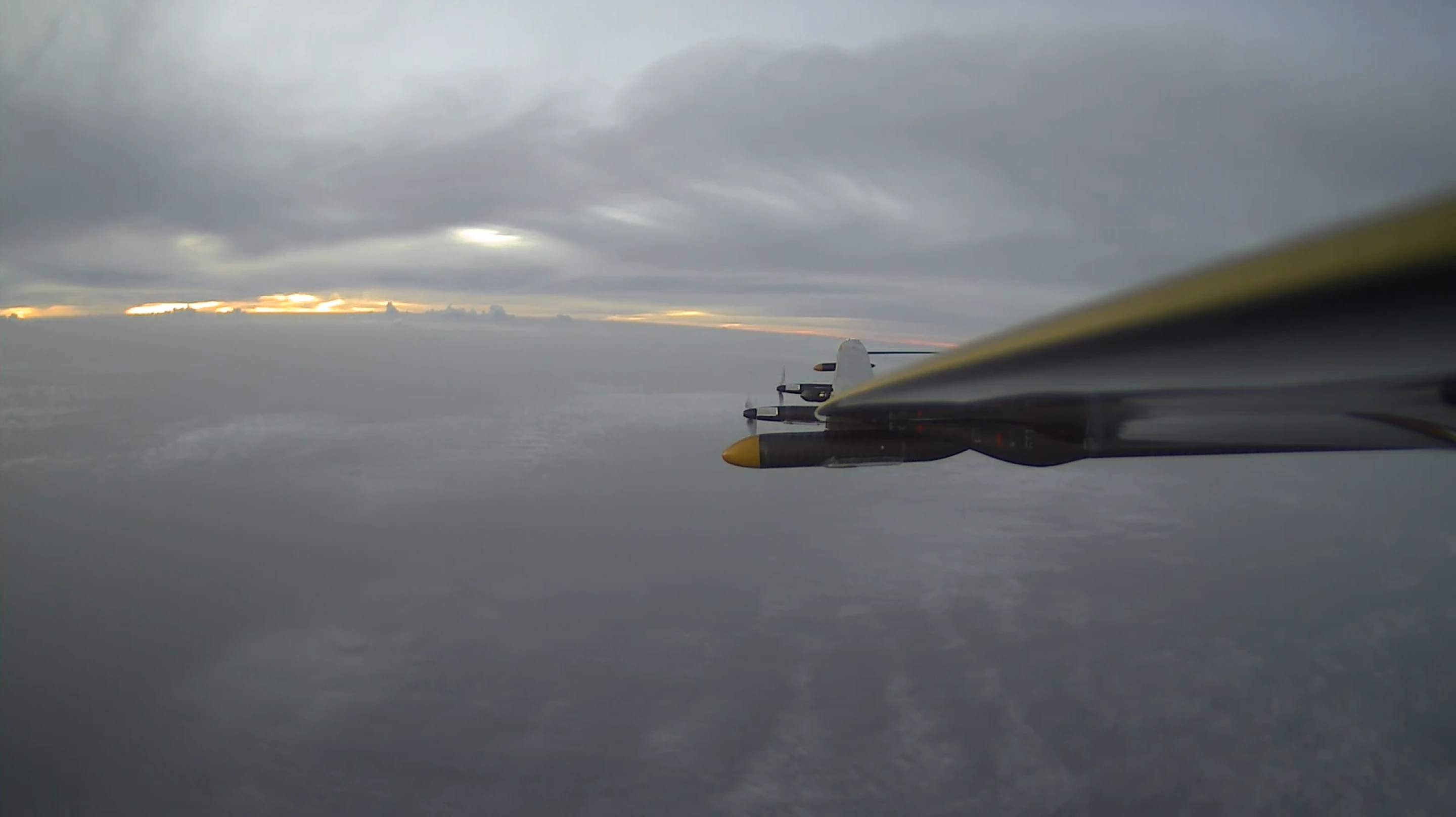
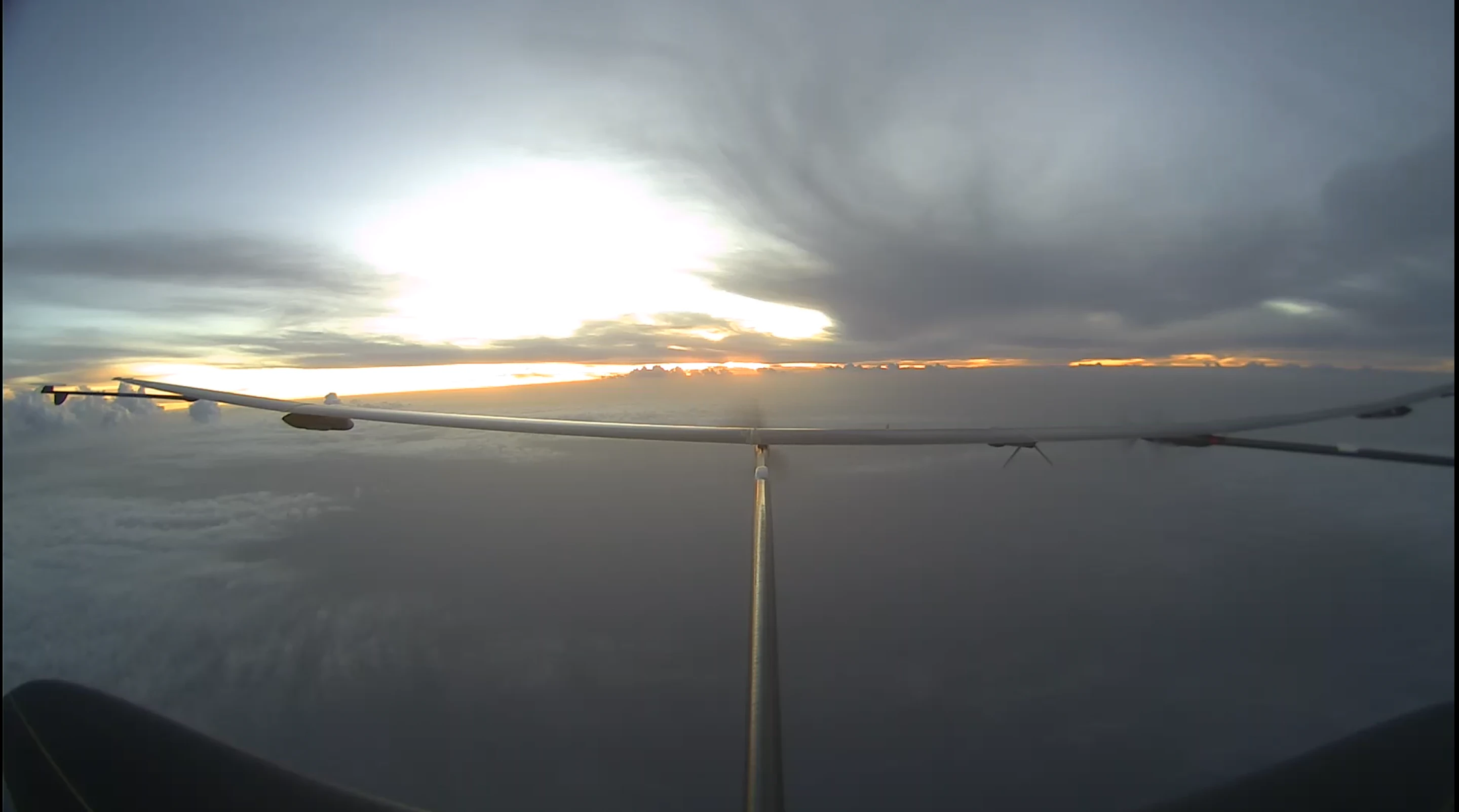
On 16 October, the solar-electric ApusNeo lifted off from Fuerteventura in the Canary Islands, stayed airborne for 29 hours and reached 47,600 feet (14.5 km); in a later sortie it pushed continuous flight beyond 80 hours against a 100-hour target. For GreenTech readers the verdict is narrow but real: a 47 kg sun-powered aircraft is approaching the endurance band where patrol-hours bought with fuel can be replaced by observation hours bought with insolation.
Analysis by Iris Vaughan, GreencarbonWorld GreenTech desk.
What did the ApusNeo flight test actually demonstrate?
It demonstrated altitude margin and airspace usability, not a commercial stratospheric service. The aircraft rose from the Canarias Stratoport for HAPS & UAS test site and flew 29 hours in the local airspace envelope, topping out at 47,600 feet. Spain's air navigation authority ENAIRE coordinated the corridor, and the published notice for the flight fixed the ceiling the aircraft was allowed to reach.
UAVOS founder and chief executive Aliaksei Stratsilatau said the platform still had climbing headroom and that it was airspace conditions — not the aircraft — that capped the sortie. That distinction matters for procurement: the limiting factor today is regulatory, not aerodynamic.
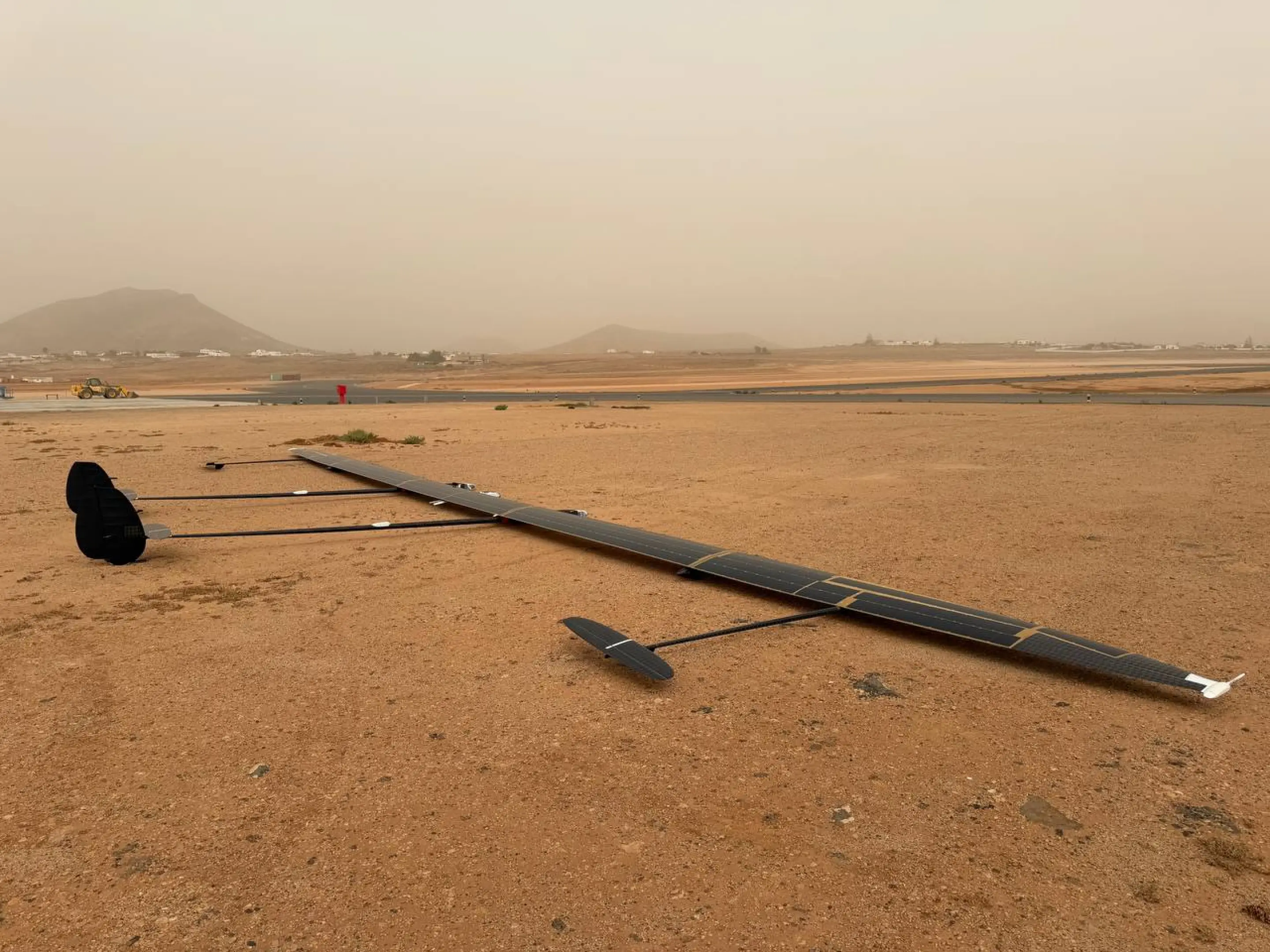
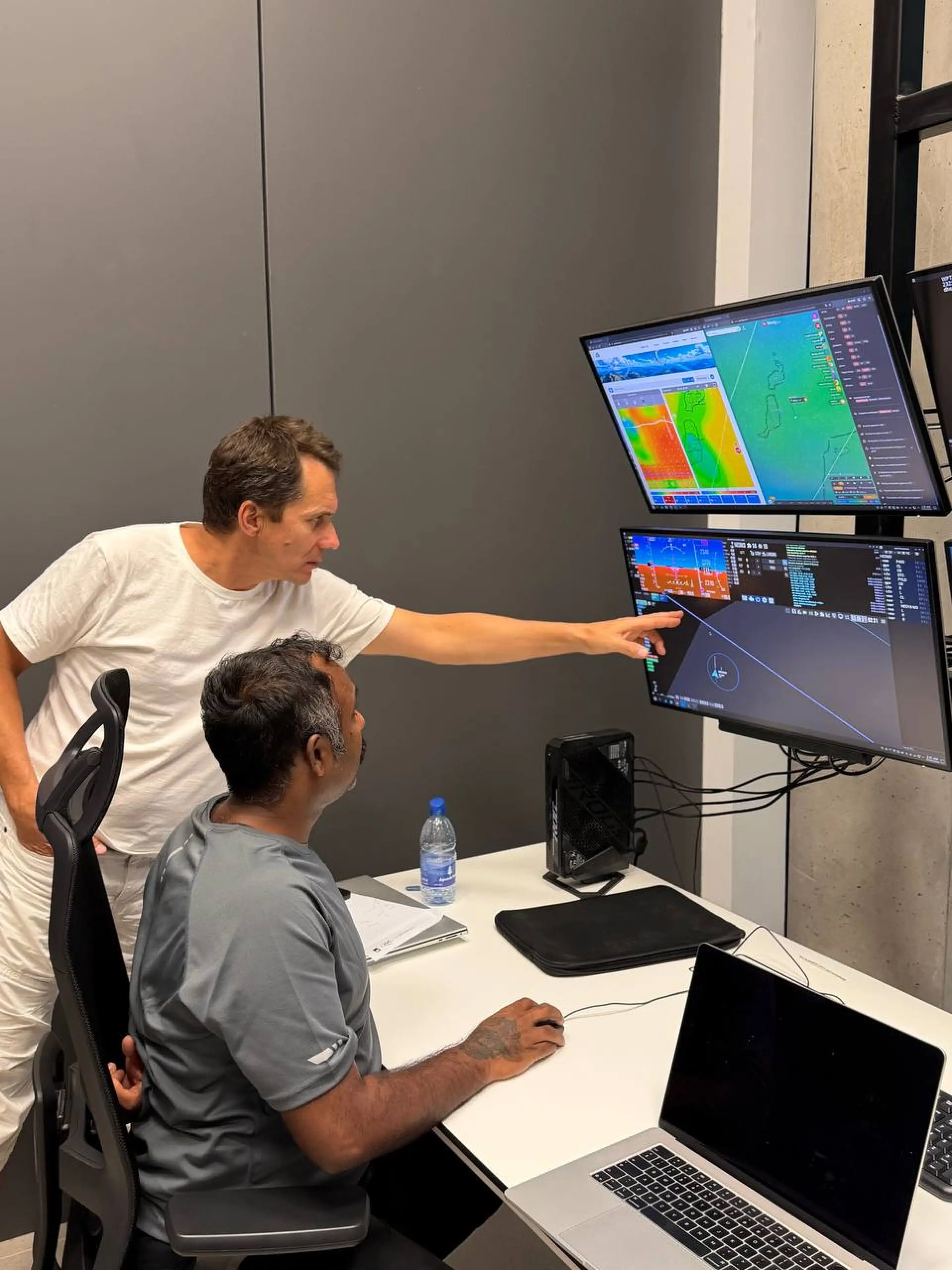
Fuerteventura is not a new venue for this airframe. Last December the same centre launched the aircraft into Spain's ISSEC research project, which examined how a high-altitude platform streams data to emergency-response operators in real time. Endurance, rather than height, was the variable being pulled earlier this year: this September ApusNeo flew twice, for 29 hours and 52 hours, and the most recent campaign carried continuous flight to more than 80 hours.
UAVOS told New Atlas that, at the time of writing, the aircraft was still airborne with more than 80 hours logged and 100 hours as the stated objective. Noticias Fuerteventura reported a cruise altitude of roughly 30,000 feet (9,100 metres) and a return to the stratoport scheduled for Saturday. Read as a series, the milestones — 29 h, 52 h, 80 h, 100 h target — look like an engineered doubling curve over one year, which is the signal that the energy subsystem, not the airframe, is now being tuned.
What is the energy architecture behind multi-day solar endurance?
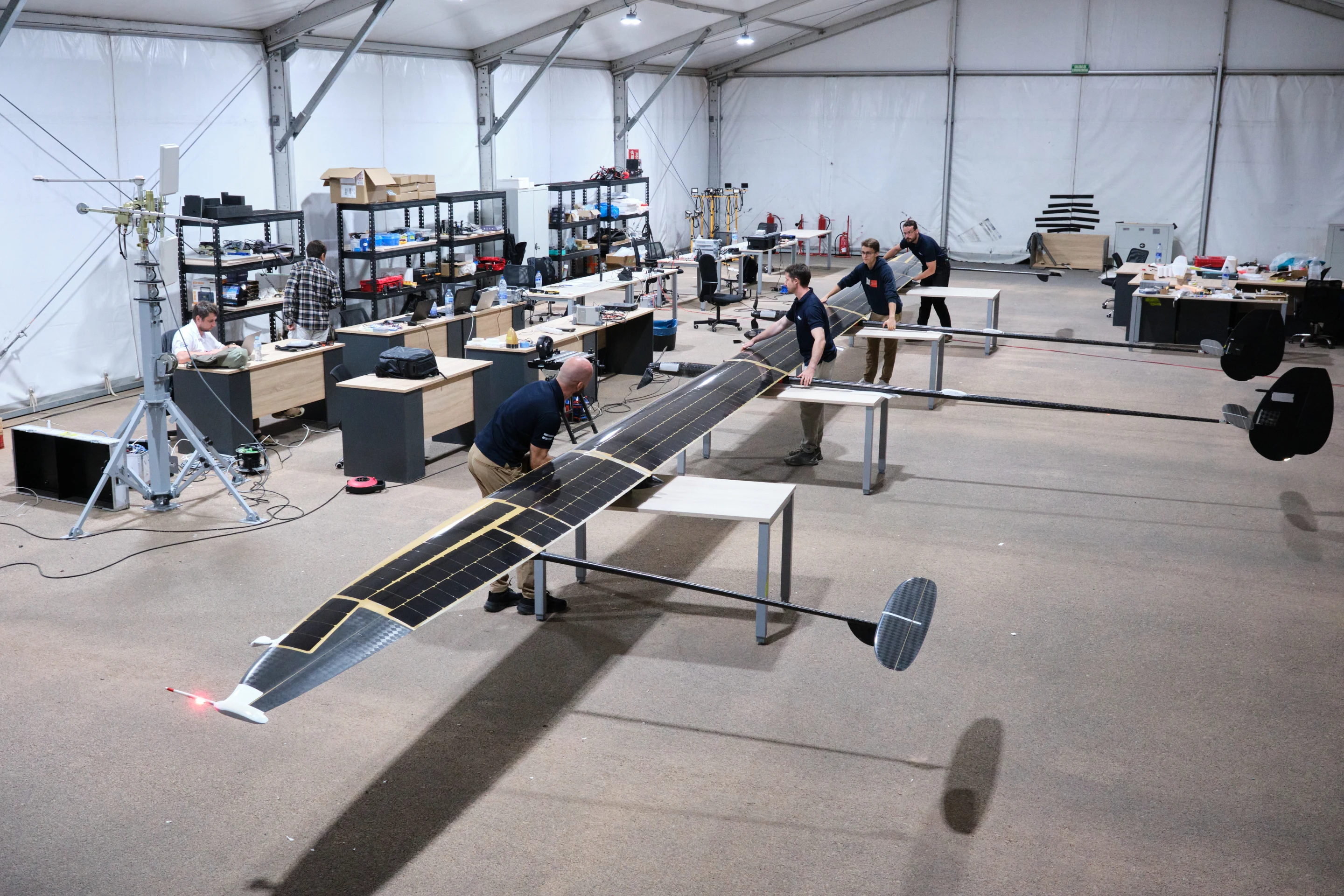
Conclusion first: endurance is set by the ratio of stored night energy to night power draw, and solar collection only sets how fast that bank refills. ApusNeo's wing surface is covered with photovoltaic panels. In daylight the array drives the electric motors directly and simultaneously charges the onboard battery; after sunset the aircraft flies on that stored charge until the sun returns.
If the day is long enough, this architecture can in principle hold the aircraft aloft for weeks. In practice, endurance is jointly determined by season, weather, solar irradiance and the aircraft's own consumption. Shorter winter daylight reduces the charge that can be banked, which is why year-round continuous flight is materially harder than a spring or summer campaign.
Two technology parameters frame how quickly this class of platform improves. First, cell efficiency: reviews of space-grade photovoltaics put flexible multi-junction gallium-arsenide structures above 30% conversion efficiency under air-mass-zero illumination, with theoretical limits for three-junction stacks above 45% (U.S. Department of Energy figures, summarised in a 2021 Materials review). Second, storage: silicon-anode cells in the 435-500 Wh/kg range have moved from laboratory claim to announced product, and in September 2026 Amprius introduced a cell rated at 500 Wh/kg at a 1C continuous discharge rate. The same battery lineage powers the endurance leader in this segment (see below). GreencarbonWorld's reading: each step up in specific energy buys night-hours without enlarging the wing, so battery roadmaps are the leading indicator for HAPS business cases — not solar-panel roadmaps.
Which engineering trade-offs set the mass and payload ceiling?
ApusNeo looks nothing like a consumer drone because its structure is optimised for a single metric: mass per unit of lift and collection area. The 2018-appearing ApusDuo prototype flew with a tandem, fore-and-aft wing planform and a wingspan of about 14 metres. The redesign removed the aft wing and stretched the surviving main plane to 18 metres, giving a longer, cleaner airframe with more panel area.
Numbers make the constraint blunt. Maximum take-off weight is around 47 kg, and the strengthened variant carries roughly 3.4 kg of payload. That is a payload fraction near 7% — our own calculation from the published figures, and it is the reason every gram of sensor, mount, radome or extra battery must be argued for individually. This October high-altitude sortie flew a single earth-observation package: a high-resolution camera plus an infrared sensor streaming imagery to the ground.
Materials are where the green-tech and the performance arguments overlap. Coverage of the UAVOS–Mira composites work on this airframe describes key components as high-modulus carbon fibre over a low-density PMI foam core in sandwich construction, chosen for stiffness with minimal mass and for consistent quality across production units. For sustainability teams this is a useful caution: ultra-light composite sandwich structures are hard to recycle, so end-of-life pathways should be written into a pilot agreement rather than discovered at retirement.
Why does continuous coverage beat better imagery for decarbonisation work?
Because emissions and losses are driven by detection latency. Infrared sensing is the load-bearing element here: a visible-light camera depends on smoke and flame, while a thermal channel detects heat change and can flag an abnormal hot zone while a fire is early and smoke is thin.
The scale of the problem justifies the persistence. Europe's Copernicus and ESA fire-monitoring collaboration reported that the March 2024 to February 2025 global fire season released more than 8 billion tonnes of CO2, about 9% above the long-term mean, and earlier analysis in Earth System Science Data found forest-fire carbon emissions rising by roughly 60% between 2001 and 2023. A platform that dwells over one landscape for days rather than minutes attacks exactly the part of that curve that is still controllable.
Set against the alternatives, the pattern is clear. A satellite covers a huge footprint but passes any given forest briefly; crewed aircraft and conventional drones are bounded by fuel, battery capacity and crew working hours and must return to base. A solar high-altitude platform parks above a defined area, watching forest, cropland or coastline continuously — and if it can fly for days or even weeks, it can spot ignition early and then follow the fire front, handing fire services live situational data instead of yesterday's orbit.
| Criterion | Solar HAPS (ApusNeo class) | Earth-orbit satellite | Manned or battery drone patrol |
|---|---|---|---|
| Dwell over one site | Continuous; 29 h, 52 h and 80 h+ demonstrated, 100 h targeted | Minutes per pass | Hours, then refuel or recharge |
| Typical altitude | 14.5 km ceiling in current testing | Hundreds of km | Surface to a few km |
| Payload flexibility | Light EO and IR packages, about 3.4 kg today | Fixed at launch | Heavier, but short-lived |
| Energy per flight hour | Sunlight plus stored charge; near-zero fuel | Launch and operations capital | Jet fuel or grid-charged batteries |
| Re-deployability | Tasked per fire season or incident | Orbit-limited | Base-limited |
How far is this from a true stratospheric platform?
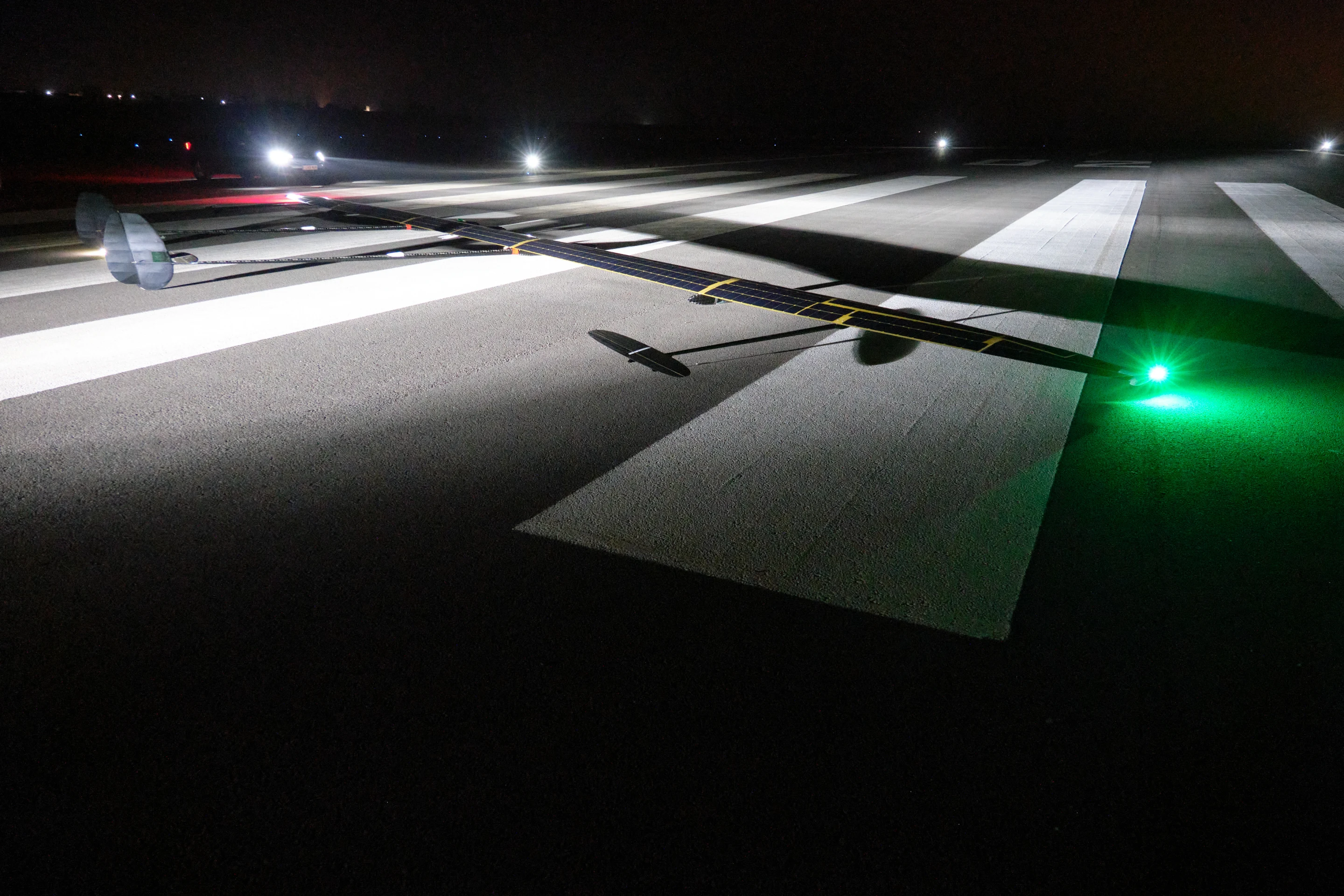
Still a long way, and the definition is not cosmetic. The International Telecommunication Union treats a high-altitude platform station as a station on an object at 20 to 50 km altitude, which is the band that unlocks designated spectrum and the pseudo-satellite business model. ApusNeo's 14.5 km peak sits below that lower bound. Its predecessor ApusDuo reached 16,686 m for 10.5 hours during a 2023 test in Rwanda, and still did not enter the ITU-defined working height.
The reference point is Airbus-developed Zephyr, now flown by AALTO, which has reached 23,195 m and, in 2025, set a continuous flight record of 67 days, 6 hours and 52 minutes — a benchmark that shows what high specific-energy silicon-anode batteries plus a mature airframe make possible.
ApusNeo is therefore in the altitude-and-endurance validation phase rather than the operations phase. But the design choice is instructive: a solar drone does not have to reach the top of the stratosphere to earn a place in forest monitoring, environmental observation or emergency communications. UAVOS is working with Mira Aerospace, the Abu Dhabi-based high-altitude platform company under Space42, to prepare the aircraft for real missions and to fit more advanced task payloads.
What should buyers watch out for? Five risks
- Seasonal energy deficit. Winter irradiance shrinks the charge bank, so a year-round service level agreement should be tested against January performance, not October.
- Airspace dependence. ENAIRE coordination and NOTAM ceilings capped this flight; each mission needs an approved corridor.
- Payload saturation. With a ~7% payload fraction, adding sensors, redundancy or a heavier downlink antenna trades directly against night reserve.
- Regulatory altitude gap. At 14.5 km the platform cannot claim the ITU 20-50 km HAPS spectrum privileges that underpin connectivity revenue.
- Materials end-of-life. Thin composite sandwich wings are mass-efficient but recycling routes are immature — flag this in ESG due diligence.
What should sustainability, engineering and investment teams do now?
Treat the 100-hour milestone as a procurement gate, not a launch button. Our recommended sequence:
- Quantify your latency problem first. If your emissions or loss exposure falls sharply when detection moves earlier — wildfire, illegal clearing, pipeline or coastal incidents — persistent observation is the right instrument; if not, satellite revisit is cheaper.
- Run a two-season pilot. Book service across a fire season and the following low-irradiance quarter, with winter endurance written into the contract.
- Freeze the payload budget. Fix camera plus IR mass against the ~3.4 kg ceiling and validate real-time downlink against your incident-management stack.
- Map the airspace owner. Identify which national authority grants the corridor and how fast a NOTAM can be issued.
- Track battery specific energy quarterly. Moves from ~435 Wh/kg to a 500 Wh/kg commercial class are the strongest leading indicator that multi-week dwell becomes routine.
FAQ: solar high-altitude drones in five questions
Is ApusNeo a stratospheric pseudo-satellite today?
Not yet by definition. It has flown to 14.5 km, while the ITU sets the HAPS band at 20-50 km. It behaves as a long-endurance high-altitude observation platform.
How long has it actually flown?
29 hours and 52 hours in two flights this September, then more than 80 hours continuous in the latest campaign, with 100 hours as the stated target and the aircraft still airborne at the time of writing.
Can it fly indefinitely?
In theory, for weeks, if the day is long enough to recharge the battery after each night. In practice season, weather, irradiance and the aircraft's own consumption decide, and winter is the binding case.
Why is the infrared channel more valuable than resolution?
Because it detects heat before smoke is visible, which converts the platform from a mapping asset into an early-warning asset — the use case that changes emissions and damage outcomes.
How much does solar power save per flight hour?
No published fuel-equivalent figure exists for this airframe, so we treat it as analysis: with a 47 kg take-off mass and propulsion drawn from sunlight rather than aviation fuel or ground-charged batteries, marginal energy cost per dwell-hour approaches zero, while capital, maintenance, airspace coordination and data integration remain the real cost lines.
Where this trend is heading
Market trackers put the global high-altitude platform segment in the low single-digit billions — one estimate pegs it at USD 1.64 billion in 2025 rising toward roughly USD 3.98 billion by 2035 — but the segment remains pre-standard. GreencarbonWorld GreenTech's judgement: the decisive variable for the next 24 months is not wingspan but night-time specific energy and regulatory altitude. Whoever clears the ITU band first converts a monitoring product into an infrastructure business; everyone else sells seasonal observation hours.
Sources and further reading
- International Telecommunication Union, "HAPS – High-altitude platform systems" backgrounder (definition of the 20-50 km band): https://www.itu.int/en/mediacentre/backgrounders/pages/High-altitude-platform-systems.aspx
- UAVOS press release, "ApusNeo HAPS Completes First Flight at 14500 Meters in European Airspace": https://www.uavos.com/apusneo-haps-completes-first-flight-at-14500-meters-in-european-airspace/
- Amprius Technologies, SiCore 500 Wh/kg cell announcement, September 2026: https://ir.amprius.com/news-events/press-releases/detail/174/amprius-introduces-sicore500-high-energy-density-cells-for-unmanned-aviation
- CompositesWorld, "Uavos, Mira Composites perform test flight of ApusNeo HAPS aircraft": https://www.compositesworld.com/news/uavos-mira-composites-perform-test-flight-of-apusneo-haps-aircraft
- ESA Climate Change Initiative, "Climate change linked to record wildfire extremes worldwide" (over 8 billion tonnes of CO2, March 2024 to February 2025): https://climate.esa.int/en/news-events/climate-change-linked-to-record-wildfire-extremes-worldwide/
- Papež, N. et al., "Overview of the Current State of Gallium Arsenide-Based Solar Cells", Materials (2021): https://www.mdpi.com/1996-1944/14/11/3075
- DataM Intelligence, High Altitude Platform market size report: https://www.datamintelligence.com/research-report/high-altitude-platform-market
- Platform performance and flight milestones as reported by New Atlas and Noticias Fuerteventura, and Zephyr record figures via AALTO/Airbus public statements.