
Three US Energy Policy Tracks After the 2026 Midterms: A Risk-and-Opportunity Comparison for Carbon and ESG Teams
By Iris Vaughan, ClimatePolicy desk, GreencarbonWorld
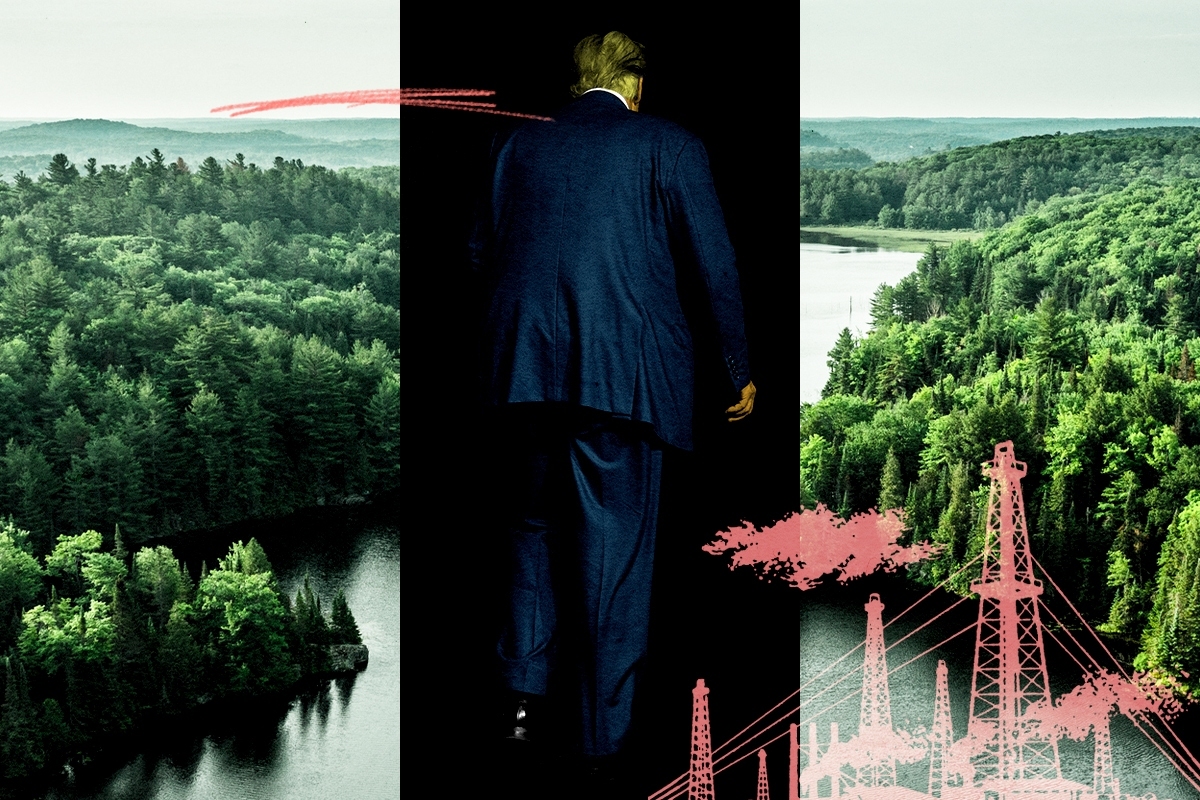
Direct answer first: Washington is no longer a single policy story. The midterms held on 3 November closed out Donald Trump's fossil-first project, but the mandate voters delivered is about cheap electricity rather than transformation. That leaves three competing tracks — a lingering federal rollback, a moderate congressional coalition, and newly empowered state regulators — and for most corporate carbon and ESG teams the state track will hit compliance calendars first.
The practical consequence for readers of GreencarbonWorld ClimatePolicy is uncomfortable: the climate signal did not get louder after Tuesday night, it got distributed. Emission targets, tax credits, permitting rules and disclosure duties now live in different institutions with different clocks. Pricing that distribution correctly is the difference between a compliance program that absorbs the shock and one that is repeatedly rewritten.
What exactly ended Tuesday night, and what replaced it?
A few months ago, the newest result from the Heatmap Pro poll, run with Embold Research, looked like a data error. For more than a year the question put to Americans had been whether they would support a data center planned near their home, and the support line had been sliding steadily; the newest print said 75% of Americans would oppose a data center in their town, most of them strongly. Michigan's senator-elect Abdul El-Sayed had put it bluntly earlier this year: "People really effing hate data centers." Voters, it turned out, also dislike Donald Trump, the Iran war and higher gas prices.
The ballot confirmed the polling. Democrats took at least 54 seats in the Senate and could hold more than 260 seats in the House; the national House vote snapped more than 15 points their way, and Hispanics, young men and white voters without a college degree — the groups that defined the Trump era — all swung in double digits toward the party.
For forecasters the comparison matters. The wave elections this writer's generation remembers are 2006, when liberals reclaimed Congress from a desperately unpopular George W. Bush, and 2010, when the Tea Party caroused against Barack Obama. This contest was larger than either and matched the 1974 anti-Watergate tsunami that reshaped the Democratic Party for a generation. One structural difference: the new majority does not lean on a states'-rights old guard. The South turned indigo, but the shift came from the ordinary politics of booming cities and suburbs, not from Civil War-era polarization.
Which three policy tracks now compete — and which one bites first?
Track one is the residue of the administration itself. Donald Trump has defined himself by climate-change denial since he rode down the escalator 11 years ago, and his second term pushed that instinct to new heights: a war on renewables, the dismantling of an already-weak federal ability to regulate greenhouse-gas pollution, and a blank check for the world's wealthiest companies to pollute in service of the AI boom. That project is over. He still has two years left in the White House and will limp to 2029 without a pliant Congress, a supportive public or an aura of invincibility. A few Cabinet resignations are likely in the next few weeks so the expiring GOP Senate can confirm replacements, and federal agencies will keep rolling regulatory agendas uphill in case the GOP wins the White House in 2028. Some Trump policies, notably the nuclear push, may even earn Democratic applause; his family's penetration of favored mining firms will face scrutiny in the new year.
Tracks two and three are where the actual compliance risk migrates. The comparison below is the one GreencarbonWorld recommends using for planning.
| Policy track | Who holds the lever | What changes for a carbon or ESG program | Horizon that matters |
|---|---|---|---|
| Track 1 — residual federal rollback | The Trump administration and its agencies until 2029, plus a GOP re-win scenario in 2028 | Repealed clean-energy support, weakened air and water rules, and pollution that has already been legally locked in; mainly an emissions-liability and reputational exposure rather than a filing deadline | Regulatory final rules and enforcement pauses, 2027-2029 |
| Track 2 — the new congressional coalition | Democrats with at least 54 Senate seats and a possible super-majority in the House | Investigations, appropriations enforcement, tax-credit restoration, permitting legislation and a data-center cost rule; the levers are funding and disclosure, not mandates | Committee agendas and any permitting bargain, calendar 2027 |
| Track 3 — state governments and regulators | New Democratic trifectas, public utility commissions, fossil-fuel regulators, state legislatures | Portfolio standards, community solar, battery-storage mandates, utility-profit limits, large-load tariffs and California-style emissions disclosure — the binding obligations on balance sheets | Filing dates and tariff dockets, 2026-2028 |
Decision rule: if your exposure is a physical asset or a corporate inventory report, read Track 3 first; if you sell into federal procurement or hold tax-credit dependent projects, Track 2 dominates; Track 1 matters mainly as a litigation-and-legacy risk that will be re-opened rather than enforced.
Why is data-center cost allocation the coalition's signature policy?
Because it is the one issue that lets a moderate legislator be tough on both Big Tech and utility bills at once. It would be wrong to assume the new era simply repeats the last one, or that these Democrats are Green New Dealers. As Jung wrote, "We cannot change anything unless we accept it," and Democrats overturned Trumpism partly by accepting its real force in politics. That is not acceptance of his conduct — the No Kings rallies and the Minneapolis rebellion settled that — but since Kamala Harris lost, the party has treated him as a normal Republican opponent, fighting him not as a "battle for the soul of the nation," as Biden liked to put it, but as a verdict on a powerful establishment politician.
The lesson taken from the other side is affordability. Voters care intensely about low prices, above all about cheap energy, and reward politicians who say so. Zohran Mamdani, Mikie Sherill and Abigail Spanberger pioneered that appeal last year, downplaying climate goals — in Sherill's case, running on cheaper power bills — and state and congressional Democrats in 2026 ran the same play. They had help: Trump undercut his own promises of no new foreign wars and energy bills cut in half by launching the Iran war, which nearly doubled some energy prices. By one estimate Americans have paid more than $100 billion in higher fuel costs since March. That compact broke, and Tuesday is the result.
Annie Andrews, the new Democratic senator from South Carolina, illustrates the template. She wants to "suspend the gas tax, unleash American energy, and get gas prices down" — a fossil-fuel tax cut — while also restoring the solar and wind tax credits, raising public transit spending, and devoting a full paragraph of her policy brochure to bipartisan permitting reform. What distinguishes her is opposition to data centers: a two-year nationwide moratorium, an end to their tax breaks, and an end to cost pass-through to ratepayers. Almost every Senate Democrat elected on Tuesday promised to make data centers pay the full cost of electricity service; it may be the caucus's most unifying policy.
The detail matters for anyone siting compute in the US. The bipartisan permitting bill, whose fate remains uncertain as of writing, would mandate full-cost service. It has since been drafted as the 417-page Bipartisan American Affordability and Jobs Act of 2026, released in late September, which pairs permitting deadlines with financial-assurance requirements for large new loads — a package Senate Democrats had already pressed in their GRID Savings Act, which would require data centers to pay the full cost of the generation, transmission and distribution capacity they require. Senate Democrats blocked a narrower Republican state-standard bill on 30 September 2026 as insufficient, according to Reuters. The scale behind the politics is real: FactCheck.org notes that PJM capacity-market charges are set to add roughly $7.3 billion to ratepayer bills in the current delivery year and about $6.5 billion in the next, attributable to data-center growth.
| Instrument | Level | Core mechanism | Who gets hit |
|---|---|---|---|
| Two-year national moratorium (Andrews-type proposal) | Federal, legislative | Pause new facilities and strip tax breaks | Hyperscale developers, speculative colocation |
| GRID Savings Act | Federal, legislative | Full-cost responsibility for generation, transmission, distribution | Large commercial and industrial loads |
| Bipartisan permitting bill (BAAJA) | Federal, legislative | Permitting deadlines plus cost allocation and financial assurance | Utilities, developers, data-center tenants |
| State large-load tariff orders | Public utility commissions | Docket-level rate design for new big loads | Any site inside that state's jurisdiction |
What energy mix does this coalition actually want?
Every kind except coal, and no revolution. Senator-elect James Talarico, a Democrat of Texas — get used to saying that — told voters that "we can add to our hundreds of thousands of oil, gas, wind, solar, and battery jobs by creating new jobs" in geothermal and hydrogen. Mary Peltola, who looks set to clinch her Alaska Senate race, argued for oil and gas's continuing importance. Adam Hamilton of Kansas, Scott Colom of Mississippi and Andrews of South Carolina all spoke of an "all of the above" energy policy. None are climate deniers; all want the wind and solar tax credits restored, and many promised more climate-resilience funding. But all vowed to grow the energy system, not remake it. Even Abdul El-Sayed, who wrote a 2019 Guardian op-ed advocating the Green New Deal, disavowed that policy and opposed a government EV mandate.
State executive power hardens this trade-off. Had Talarico won alone in Texas, he might have walked a careful line on fossil fuels. But Gina Hinojosa will be the state's next governor, with a direct role in managing the Permian Basin; keeping her job means accepting that Texans' livelihoods depend on oil and gas, in the way Mamdani has had to accept that Wall Street is central to the economy of New York City. The same restraint applies to the 10% of U.S. emissions that come from American agriculture. If Scott Colom holds Mississippi's Senate seat, it will be in no small part because of a viral ad mocking the incumbent for telling voters to choose a cheaper protein than beef. "Pick another protein?" an everyman griller asked the camera. "I’d rather pick another senator instead."
Which is why the result tastes faintly bittersweet to some climate defenders. Democrats finally trounced Trumpism at the ballot box, progressives proved they can win battlegrounds under a favorable national environment, and moderates stormed the heart of MAGA America — but doing so required everyone, liberals and progressives alike, to articulate more moderate views on energy. After 2012 the party had imagined a permanent progressive majority shorn of right-leaning white voters; that fantasy never materialized, and now the price of a mega-majority is a tacit tolerance of the gap between what the science says and what voters care about, a more honest starting point than the 2020 settlement that assumed the two were identical.
How much carbon is actually at stake?
Two credible estimates bracket the range. Energy Innovation's state-by-state analysis of federal energy-policy changes and climate repeals in 48 states attributes about 9.3 billion tons of CO2-equivalent emissions to the rollback, roughly 580 million tons per year, and projects that households in the contiguous United States will pay some $650 billion more on energy by 2040 than they would have under retained policy. Against that, the Rhodium Group's Taking Stock 2026 finds the country still on track for 3.8-4.8 gigatons of net greenhouse-gas emissions in 2040 — a 27-41% cut from 2005 levels — because state standards, corporate procurement and economics do not repeal easily.
Read together, the two numbers are the core analytical finding for carbon markets and investors: federal reversal raises the emissions ceiling, but state and market response keeps the floor far below a full policy collapse. That asymmetry is what makes Track 3 the highest-value variable to monitor, and it is why the fight against conventional air and water pollution is likely to come back big. Senator Jon Ossoff of Georgia, who won one of the night's most convincing victories, repeatedly named microplastics and "forever chemicals" in his speeches, linking contamination of human bodies to corruption of the body politic.
Where does enforcement live now — and what must a filer actually do?
The compliance anchor has moved from Washington to the states. The SEC has proposed rescinding its March 2024 climate-disclosure rules, while California's SB 253 still requires entities with revenue above $1 billion doing business in the state to report Scope 1 and Scope 2 emissions beginning in 2026, with Scope 3 following in 2027, as the California Air Resources Board program describes. In other words: a federal deregulation headline does not remove a single state filing obligation, and a corporate inventory built to the lowest federal common denominator will fail on day one.
The same is true of rate regulation. Democrats won state offices they have not held in a generation — public utility commissions, fossil-fuel regulators and state legislative seats. With a new trifecta, Pennsylvania could allow community solar, mandate battery storage and restrict utility profits, and House Democrats there have flagged grid-reliability bills after warnings from the state utility commission. Georgia Democrats flipped control of the state's utility commission for the first time in decades, per Grist. Historic majorities mean low-hanging climate policy gets picked for years, without any vote on Capitol Hill.
Common misconceptions that will misprice this transition
- "A blue wave means Green New Deal policy returns." The opposite: winning MAGA America required liberals and progressives alike to articulate more moderate energy positions. The coalition has energy moderates at its core.
- "Affordability politics and decarbonization are rivals." They are not, once you look at the instruments: transmission build-out, revived EV subsidies and battery storage are simultaneously cost-cutting and emissions-cutting tools.
- "Fossil fuel companies remain the primary foil." At national level, data centers and Big Tech can eclipse them; at least one former climate activist won on Tuesday running against data centers and large-scale solar, because AI is the fastest-growing form of industrial energy use and creates far fewer jobs than a chip fab or steel mill.
- "Federal deregulation settles the emissions question." It raises the ceiling but not the floor; the state-track projections remain the dominant variable through 2040.
- "Both sides now accept trade-offs." This is the hardest one. Since 2020 Democrats tried to revolutionize the energy system, reindustrialize the country and overhaul the economy without acknowledging trade-offs, and voters hated it. Trump and the Republicans tried to reinthrone fossil fuels and give birth to a "superior intelligence," likewise refusing trade-offs, and as the returns showed last night, voters hated them more.
Action checklist: the next 90 days for carbon and ESG leads
- Re-map your disclosure obligations by jurisdiction, not by federal headline: confirm SB 253-scope revenue tests, Scope 3 timing, and any state climate-rule analogue in your operating footprint.
- Model a large-load tariff scenario for every US data center, plant or electrified process you are siting; assume full-cost grid responsibility becomes the default rule rather than the exception.
- Stress-test tax-credit-dependent projects against a two-year moratorium and against restoration of solar and wind credits — the swing is policy, not technology cost.
- Open a docket watch on public utility commissions newly held by Democrats, prioritizing battery storage, community solar and utility-profit-limit proceedings.
- Prepare for congressional oversight: appropriations enforcement, document requests and industry testimony will land on favored firms and rollbacks first; keep an evidentiary file for every federal waiver or exemption you rely on.
- Rewrite external messaging around cheap, reliable power and pollution control — microplastics and "forever chemicals" are becoming the electorally durable framing, not abstract net-zero pledges.
Frequently asked questions
Is the US still a viable market for clean-energy capital after the midterms?
Yes, but with a different risk profile. Federal rollbacks raise near-term emissions, while Rhodium's projection of a 27-41% cut below 2005 levels by 2040 shows the underlying trajectory intact. The binding risks are now permitting, interconnection and state-level cost allocation.
Which policy change should a corporate board worry about most?
Data-center and large-load cost allocation. It converts a siting assumption into a balance-sheet line item within one tariff cycle, and nearly every new senator has endorsed the principle.
Will wind and solar tax credits come back?
The incoming caucus broadly supports restoring them, including senators who campaign on "all of the above" supply. Restoration is a funding-and-credits question for Congress, not a mandate question, so expect it to travel with any permitting bargain.
Does federal deregulation end corporate climate reporting?
No. Federal rescission proposals do not void state reporting duties, and the first California Scope 1 and 2 filing wave arrives in 2026 with Scope 3 in 2027.
Verified sources
- Heatmap News — midterms, clean energy and climate mandate coverage, 5 November 2026: https://heatmap.news/daily/2026-midterms-democrats-climate-energy
- Rhodium Group, Taking Stock 2026: US Energy and Emissions Outlook: https://rhg.com/research/taking-stock-2026/
- Energy Innovation, Economic, Consumer Cost, Pollution Impacts of Federal Energy Policy Changes in 48 US States: https://energyinnovation.org/report/economic-consumer-cost-pollution-impacts-of-federal-energy-policy-changes-in-48-u-s-states/
- Reuters, US Senate blocks bill to address data center costs, 30 September 2026: https://www.reuters.com/world/us-senate-set-block-bill-address-data-center-costs-2026-09-30/
- FactCheck.org, Data Centers and Electricity Prices, October 2026: https://www.factcheck.org/2026/10/data-centers-and-electricity-prices-its-not-as-simple-as-voters-may-think/
- JD Supra, Senate Unveils Bipartisan Comprehensive Permitting Reform Bill: https://www.jdsupra.com/legalnews/senate-unveils-bipartisan-comprehensive-2099420/
- California Air Resources Board, Corporate GHG Reporting and Climate-Related Financial Risk: http://ww2.arb.ca.gov/our-work/programs/california-corporate-greenhouse-gas-reporting-and-climate-related-financial-risk
- Grist, What a historic blue-wave midterm means for climate action: https://grist.org/elections/midterms-2026-blue-wave-climate-races-data-centers/
GreencarbonWorld's reading: decarbonizing an economy is slow, unglamorous work — "a slow boring of hard boards," in Max Weber's phrase — and the politicians turning the screws next may not sit where most analysts are looking. The United States still must commercialize batteries, build electric vehicles, expand generation, cut pollution and lower prices, and both parties have so far failed at all five. Democrats have proved they can learn from Donald Trump's mistakes. Whether they learn from their own is the only question left that a compliance officer cannot hedge.
Editorial and corrections: info@greencarbonworld.com — GreencarbonWorld, ClimatePolicy desk.