
GreencarbonWorld CleanEnergy Scorecard: Grid Capex, Fed Pause, Permitting and Green Banks
By Iris Vaughan · GreencarbonWorld CleanEnergy
This CleanEnergy scorecard treats the Federal Reserve’s hold as secondary to GE Vernova’s $9 billion Trench Group acquisition: transmission hardware, permitting reform and green-bank financing decide whether renewables and storage scale. For developers, investors and city officials, the practical path is to lock equipment slots, build predictable construction timelines, and use environmental attribute certificates as bridge demand.
What this week’s clean-energy news actually compares to
Climate volatility is a procurement variable, not a sidebar. The West Coast could face a Pineapple Express, the Southwest may see heavy rain on Halloween, and the Bering Sea storm from Typhoon Champi left four-foot waves lapping on Alaska’s shore. India also illustrates adaptation gaps: nearly 200,000 people were evacuated in Andhra Pradesh, yet Cyclone Arnab killed at least nine and ruined tens of thousands of acres of crops.
Fed pause: what does it mean for project finance?
The Fed, the operational name for the Federal Reserve, chose on Wednesday to keep benchmark rates unchanged, even after inflation statistics rose last month. The Federal Open Market Committee said the federal funds target range would remain between 3.75% and 4%, preserving the quarter percentage-point increase made last month. The policy language warned, “Inflation remains elevated,” and added: “The accumulation of more information will help the Committee determine the policy stance appropriate to ensure a timely return of inflation to the Committee’s 2% goal.” For clean-energy developers, whose projects depend on borrowing costs, a pause is preferable to a hike, though a cut would be better still.
Grid capex: why a $9 billion equipment deal beats a rate signal
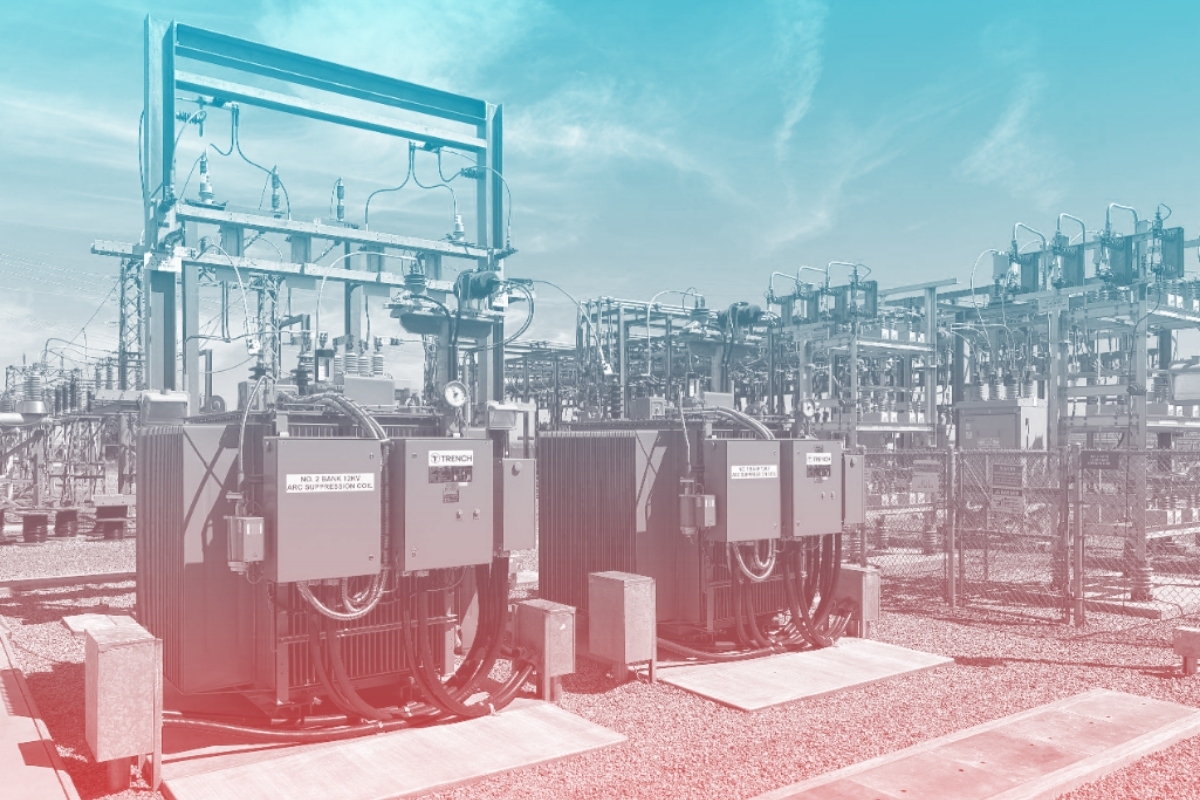
GE Vernova’s gas turbine unit is thriving as data centers create demand for new generators, while its nuclear joint venture with Hitachi is advancing an order book for the 300-megawatt small modular reactor, the BWRX-300. On Wednesday, the General Electric spinout said it would pay $9 billion for Trench Group, a global maker of high-voltage transmission equipment and grid components, with the deal expected to close at the end of next year. Reuters identified the seller as Triton Partners. GE Vernova’s third-quarter release also put orders at about $29 billion, up 96%, a signal that equipment scarcity, not abstract climate narrative, is shaping procurement queues. Scott Strazik said, “Trench’s differentiated high-voltage grid technology, strong execution, and deep customer relationships are key enablers of the modernized, resilient grid required to keep pace with the electricity supercycle,” in a press release. Other companies are also placing bets on grid construction: Hitachi announced a $1 billion investment in a U.S. transformer factory last year, and a former Tesla executive launched Heron Power to make transformers for data centers and renewables. The Department of Energy has in recent weeks pumped billions of dollars into upgrading the U.S. power grid.
Permitting reform: speed, safeguard and political trade-off
More than 40 clean-tech startups urged both parties in Congress to pass permitting reform legislation before the session ends. In a letter published Thursday morning, they said the Bipartisan American Affordability and Jobs Act helps innovators spend more time building and less time waiting. They added that it restores confidence that American projects can move from concept to construction on predictable timelines. Signatories included Fervo Energy, Quaise, Zanskar, Heirloom, Commonwealth Fusion Systems, and Realta. The National Association for the Advancement of Colored People issued a statement warning lawmakers against BAAJA, saying it would lock in dirty energy for decades and make it harder for people to show they are harmed by pollution. Sympathetic audiences at the upper rungs of the Democratic Party will undoubtedly be available to the group. In remarks obtained by Jael Holzman, John Podesta, the senior climate policy advisor in the Biden White House, said at a conference last week that he worried the bill could hand Trump a loaded Howitzer.
Green banks: how NYC might fix the transaction-cost trap
New York City may have something to learn from Connecticut, New York’s neighbor, which in 2011 established the nation’s first green bank. As of this year, the agency has directed more than $3 billion toward projects such as solar and storage systems on public housing. Jason Kowalski, executive director of the Public Renewables Project, said, “What we saw in Connecticut was a way to get community-scale renewable projects built that markets alone were not delivering,” adding that “With New York City, similarly, we’re looking to fill market gaps.” A new report released Wednesday by his group, along with Public Power NY and the Climate & Community Institute, proposed that NYC create its own green bank modeled on Connecticut’s experiment. Kowalski said, “We’re not thinking about public versus private,” and later, “We’re thinking of public versus nothing. We’re targeting places where nothing is getting built. This is a mechanism for building revenue-positive projects that are not being built because of the transaction costs or because there is no planning function that’s brought in to plan at any scale.”
For comparison, New York State’s broader green-bank platform has already been described in international policy tracking as having committed more than USD 2.5 billion to building decarbonization, energy storage, solar and related projects, suggesting a city-level vehicle could focus on hyper-local gaps rather than state-scale intermediation. The proposal could find sympathetic eyes in Zohran Mamdani’s administration. The democratic socialist has embraced venturing where, since the 1990s, government has rarely gone. City Hall brokered a deal two weeks ago to chip in $30 million for New York University’s next-generation computing lab in exchange for 15% of the proceeds from any technology the facility develops and sells. The arrangement looks like New Dealism for quantum computing. Public financiers could also help cities undertake costly renovations and infrastructure upgrades needed to survive in a hotter, more meteorologically chaotic world. The European Commission this week unveiled new climate rules requiring governments to establish who is responsible for protecting citizens from climate disasters, Euronews reported. Brussels wants major cities to prepare for as much as 3 degrees Celsius of warming above pre-industrial norms, more than double the warming already seen from El Niño.
Low-carbon cement: does EAC demand move projects to construction?
Cement produces roughly 8% of global emissions of heat-trapping carbon dioxide — four times the output of airplanes. Cutting emissions across the wider economy requires building a lot of stuff, which paradoxically means using more cement and adding to emissions. But startups are rolling out new approaches to make low-carbon cement. Meta, the Facebook owner, agreed to buy environmental attribute certificates associated with 200,000 tons of San Jose-based Fortera’s low-carbon cement. Fortera’s project materials describe a multi-year EAC supply arrangement, and ESG Today reported the cement pathway can carry a carbon footprint about 70% below ordinary Portland cement. Ryan Gilliam, Fortera CEO, said in a statement, “Agreements of this scale and duration are what unlock financing and move projects from plans to production,” and added: “They also show the market that low-carbon cement is a product that buyers are serious about and planning around for years to come.” The clean cement sector has been, as Katie Brigham wrote, riding the artificial intelligence wave.
Critical minerals: why antimony is now a clean-energy bottleneck
Antimony is a lustrous, silvery-gray metalloid needed for solar panel glass and all kinds of batteries, and the U.S. overwhelmingly relies on imports from China and Tajikistan. Maybe not for long, Mining Technology hinted. On Wednesday, Alaska’s Department of Natural Resource gave final approvals to startup Nova Minerals. The project, funded with nearly $45 million from the Department of Defense, aims to begin production next year. Mining.com reported the final permitting milestones came within roughly three months of submission, while Nova Minerals’ project materials point to a Port MacKenzie refinery plan; the timeline is not a guarantee, but it is a useful signal for manufacturers seeking non-Chinese inputs.
Decision matrix for clean-energy buyers and project owners
| Option | Best fit | Key advantage | Main exposure | Action now |
| Grid equipment supplier partnership | Utilities, data centers, large industrial loads | Secures high-voltage hardware amid demand growth | Delivery lead times and post-closing integration | Compare transformer, switchgear and HVDC slots before signing EPC contracts |
| Permitting-ready project pipeline | Developers, infrastructure funds, ESG lenders | Converts policy change into faster construction schedules | Litigation, community opposition and interconnection delays | Build environmental review data rooms early, not after funding |
| City green bank | Municipal governments, community solar and storage owners | Reduces transaction costs and de-risks small projects | Governance design, credit underwriting and political risk | Use Connecticut as a template, but set NYC-specific planning capacity |
| Low-carbon cement EACs | Owners with embodied-carbon targets and real-asset developers | Creates bankable demand before plants are fully financed | Verification, additionality and price volatility | Match EACs to plant locations, construction windows and durability claims |
Common misconceptions
- A rate hold is not a clean-energy tailwind; it merely avoids a higher cost of capital. The real constraint is often equipment delivery, grid access and permitting certainty.
- A large acquisition is not proof of cheap transmission gear. It signals scarcity and the need for long-term supplier relationships.
- A green bank is not simply a subsidy pool. Its value is planning, aggregation and transaction-cost reduction for projects that private finance cannot package efficiently.
- An environmental attribute certificate is not a universal decarbonization substitute for steel, cement or power. It helps finance marginal emissions reductions, but buyers still need physical delivery.
Action checklist
- Map procurement critical path: transformers, high-voltage switchgear, batteries, turbines and interconnection studies.
- Stress-test project returns at 3.75% to 4% federal funds rates, not only at projected cuts.
- If a project needs 15% of proceeds back to a public partner, model cash-flow dilution before signing.
- For cement, data centers or storage, verify EAC boundaries, third-party reporting and physical supply before making sustainability claims.
- Monitor antimony, battery and module glass inputs as clean-energy hardware constraints, not only as mining stories.
FAQ: decision-makers ask these questions
Is the Fed’s rate hold positive or negative for renewables?
It is mildly supportive. The Fed did not raise borrowing costs further, but the Federal Reserve’s wait-and-see stance keeps capital expensive compared with a cutting cycle.
Why does GE Vernova’s $9 billion deal matter beyond the stock market?
Because Trench Group strengthens high-voltage grid manufacturing, and GE Vernova’s order backlog shows utilities and data centers are competing for the same equipment. Scott Strazik’s comment on the electricity supercycle makes that procurement pressure explicit.
Should cities copy Connecticut’s green bank model?
They should copy its function, not its geography. The Connecticut example shows how a public intermediary can mobilize more than $3 billion for community-scale projects. NYC needs local capacity, planning and risk-sharing to do the same.
Are low-carbon cement credits a practical climate action?
Yes, but only as part of a larger strategy. Meta’s purchase of EACs tied to 200,000 tons of Fortera material gives a demand signal that can support financing, yet real emissions cuts depend on plant construction, fuel mix and durability.