
BAAJA Transmission Reform Explained: A Step-by-Step Playbook for U.S. Clean-Energy Project Teams
BAAJA is less a climate bill than a delivery-speed bill. It expands U.S. transmission capacity, rewrites federal environmental review, and reforms the interconnection queue that has been stalling solar and storage for years. For clean-energy teams, the practical payoff is a shorter critical path — but only for organisations that rebuild their siting assumptions, permitting calendars and queue strategy now, instead of waiting for the first post-law casebook to prove the point.
By Iris Vaughan, GreencarbonWorld CleanEnergy desk. Story tips and corrections: info@greencarbonworld.com.
What does BAAJA actually change for a clean-energy project?
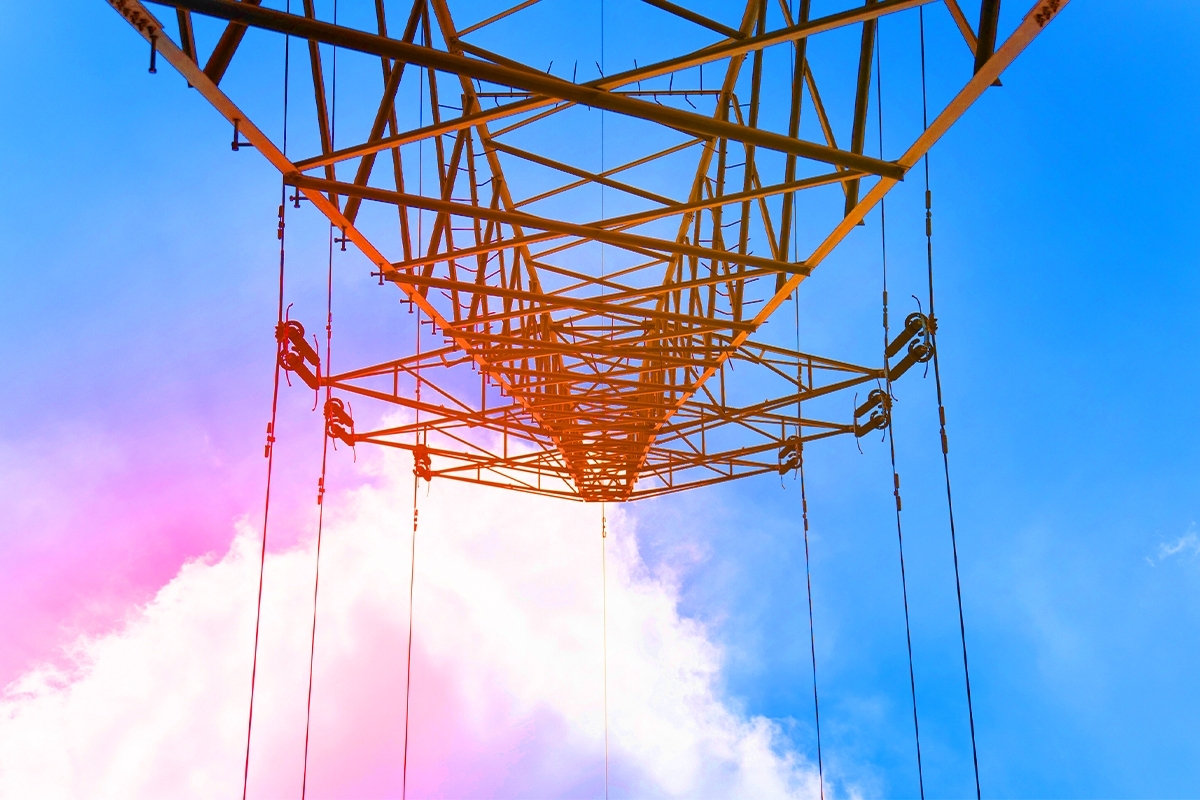
Conclusion first: the bill attacks the delivery chain, not the generation fleet, so its value shows up in schedules rather than in new subsidy lines for panels or turbines. Power lines are essential for decarbonisation because they move electricity from the country's sunniest and windiest places to its cities, towns and suburbs — without conductor, there is no renewable megawatt, no matter how cheap the modules.
- Review clocks. Today, it takes twice as long on average to conduct a federal environmental impact study for transmission lines as it does for pipelines, according to Rhodium data — the single metric that most often decides whether a corridor dies of old age or gets energised.
- Affirmative build. The Rhodium Group estimates the law could raise the amount of new transmission capacity added per year nationwide by 167% to 262%, compared to the average rate over the past decade.
- Queue mechanics. Instead of one study per project, generation would be able to join the grid in batches — the provision most likely to change a developer's cash-flow profile first.
A second-order point that is easy to miss: the same Rhodium Group analysis notes that U.S. high-voltage line-building already had a poor recent record, with 2021-2024 the four slowest years of construction since at least 2010. Any percentage measured against the past decade is therefore a rate of change from a depressed floor — read it as recovery speed, not as guaranteed tonnage of steel. Columbia University's Center on Global Energy Policy reaches a comparable conclusion in its BAAJA white paper: it is the bill's regional and interregional planning duties, plus its interconnection reforms, that do the work of containing cost exposure.
Why the headline transmission gains may be undercounted
Emily Pontecorvo and a colleague obtained the first look at the Rhodium Group analysis of what the bipartisan permitting bill will do to emissions, and the Heatmap Daily report appeared at Heatmap.
The upshot, as GreencarbonWorld reads it: BAAJA's most consequential provisions are likely climate-neutral in a worst-case scenario and could reduce emissions in more optimistic ones. Those scenarios are not about how the text is interpreted — they are about what happens in the broader energy economy, such as economic growth or oil prices, which then feeds back into the emissions arithmetic.
Where the analysis may sell the bill short is method. The Rhodium authors did not have time to run a full network study of the U.S. transmission system, the kind that resolves physical footprint, power flows and existing bottlenecks. They examined supply and demand inside the broader energy system instead. That was reasonable, and probably the only decision available: because of how energy-system models work, a fuller analysis might have taken weeks, plus a very large budget and heavy compute. When the National Renewable Energy Lab studied how quickly Los Angeles could switch to 100% renewable energy earlier this decade, it modelled every transmission line and substation in LA; the supercomputer churned through more than 100 million simulations and the research effort took three years. Had Rhodium done even a fraction of that work on the national grid, its verdict would have arrived well after Congress's window to vote had closed.
Practical takeaway for a project team: the 167% to 262% range is directional, not node-specific. If your asset sits behind a known congestion constraint, require flow-level or cluster-level evidence before transmission relief is written into an underwriting model.
Is Congress the slowest link, or the grid itself?
Conclusion: the sector Congress is trying to speed up is itself the slower example. The LA 100 study was unusually exhaustive, yet clean-energy projects are required to conduct similar studies all the time. In many regions a new solar farm or battery project cannot connect until operators study its effect on grid congestion everywhere else. As it happens, BAAJA aims to fix that process by allowing power plants to join the grid in batches. If Congress seems slow, in other words, the electricity sector is another place to look.
The baseline queue clock is worth putting next to that irony. Berkeley Lab and Watt Coordination research, summarised by Utility Dive, found average interconnection wait times of about five years in 2022, up from roughly four years for projects built between 2018 and 2022 — a trend that batched studies are meant to bend rather than reverse overnight.
Which steps should a project team take now?
Work through this six-step sequence to convert permitting reform into a schedule advantage.
- Re-baseline the permitting calendar. Split federal review from state authorisation on your Gantt chart and label each segment separately; the twice as long penalty attaches to linear infrastructure rather than to a fenced generation site, so corridor sections are where your float disappears.
- Screen sites against planned corridors. Follow regional and interregional plans in the balancing authority you are bidding into, since new planning duties change which circuits get prioritised and therefore which nodes relieve.
- Price grid-enhancing technologies before new steel. Dynamic line rating, dynamic transformer rating, advanced power flow control, topology optimisation and storage operated as a transmission asset increase usable capacity on existing circuits. The IEA's grids chapter in its Electricity 2026 report treats these tools as a core expansion lever, and legal analysis of the Senate bill for transmission developers highlights incentives for utilities to get more out of the existing grid instead of building unnecessarily.
- Assemble a batch-ready interconnection packet. Complete datasets, site-control evidence and a defensible co-located storage configuration make a project a low-friction candidate when studies are run in clusters rather than serially.
- Budget for queue discipline. The Bipartisan Policy Center explainer notes that BAAJA's interconnection language uses nonrefundable deposits and withdrawal penalties to discourage speculative projects; move those amounts into committed development capital, not into a reversible assumption.
- Model the cost-allocation shift. Grid Strategies has estimated the charges that data centres would face under the bill's new transmission pricing provisions. Near load hubs that re-pricing flows back into power-purchase and tolling levels, so test your term sheet against both a high and a low cost-allocation outcome.
How does the practical route differ from the old one?
| Decision point | Pre-reform practice | BAAJA-aligned practice | What to watch |
|---|---|---|---|
| Environmental review | Serial federal study, transmission clock roughly double the pipeline clock | Streamlined, coordinated review with timelines moved forward | State siting authority is untouched |
| Source of capacity | New line or nothing | New line plus grid-enhancing technologies on existing circuits | GETs headroom is seasonal and must be operationally proven |
| Interconnection | Project-by-project studies, multi-year queue | Batched or clustered studies and faster processing | Deposits and penalties raise cash at risk |
| Planning input | Weak interregional process, few major lines built for years | Regional and interregional duties with a federal backstop | A plan is not a construction schedule |
| Emissions claim | Assume renewables automatically win | Attribute only what local flow and dispatch evidence supports | Worst-case modelling is climate-neutral |
What are the traps that sink otherwise sound projects?
- Assuming federal speed equals local permission. Columbia's analysis identifies three interrelated barriers to grid expansion — fragmented planning, state-by-state siting authority and unclear cost allocation — and clearing one does not delete the others.
- Booking transmission relief into a net-zero or PPA plan before the conductor exists.
- Treating the 167% to 262% estimate as a line-mile forecast rather than an annual capacity-addition rate.
- Ignoring contested ground. The Sierra Club and Earthjustice are both evaluating the roughly 400-page bill through the lens of protections and access to affordable clean energy, which keeps amendment and litigation risk inside any credible schedule.
How much emissions credit is the bill really worth?
Enough to matter, not enough to bank. Reporting on the Rhodium modelling, RTO Insider notes lower emissions in two of three scenarios, with cumulative avoidance of as much as 1.5 gigatons through 2040. The spread exists because new transmission only cuts emissions if the capacity it unlocks displaces something carbon-intensive — a dispatch question, not a conductor question.
FAQ: the first questions project teams ask
Does BAAJA shorten my interconnection wait?
Partly, and later than most developers hope. Batched studies attack the process bottleneck; deposits and withdrawal penalties attack the speculative-volume bottleneck. Neither removes the engineering work needed to relieve a specific constraint.
Can I treat this as a climate measure in carbon accounting?
No. The headline result is climate-neutral in a worst case and emissions-reducing in better scenarios driven by macro conditions. Report the grid upgrade as an enabling asset, not as a pre-purchased reduction.
Which technologies benefit most?
Utility-scale solar and storage in resource-rich but load-distant areas first, then grid-enhancing technology retrofits on constrained corridors, and finally firm clean supply near heavily loaded hubs.
Should corporate energy buyers care?
Yes — on price and reliability. Beyond connecting clean energy, transmission has the potential to improve grid reliability and lower electricity prices, which is why Rhodium frames the bill as a cost story as much as a carbon story. Re-priced cost allocation for very large loads will also change the competitive backdrop for industrial power contracts.
What is the single most useful action this quarter?
Re-run your project's critical path with federal review and interconnection separated into two tracks, then assign a named owner to each. That exercise alone usually reveals which half of your schedule reform can genuinely compress.
Where to verify the numbers
- Rhodium Group — Estimating the U.S. energy-system impacts of BAAJA
- Heatmap Daily — Think Congress is slow? Meet the power sector
- Bipartisan Policy Center — Explaining the Senate permitting bill
- Columbia Center on Global Energy Policy — What BAAJA means for the U.S. energy system
- Utility Dive — Berkeley Lab interconnection queue and wait-time data
- IEA — Electricity 2026, grids chapter
- Grid Strategies — Grid funding from data centres in BAAJA
Edited by the GreencarbonWorld CleanEnergy desk, which covers renewable generation, storage, hydrogen, efficiency, power markets and decarbonisation policy. Contact the team at info@greencarbonworld.com.